Emergency Water Damage Repair in Kuna Town Center

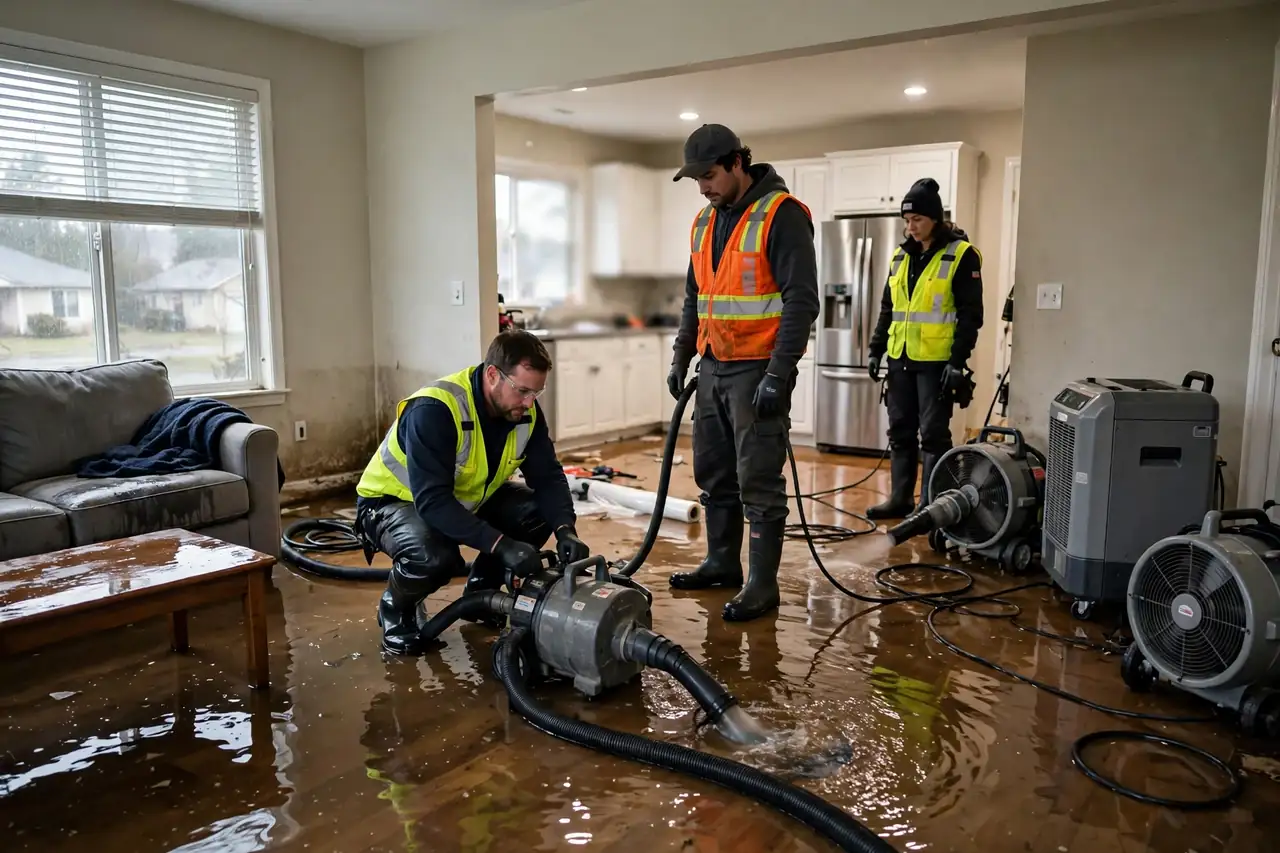
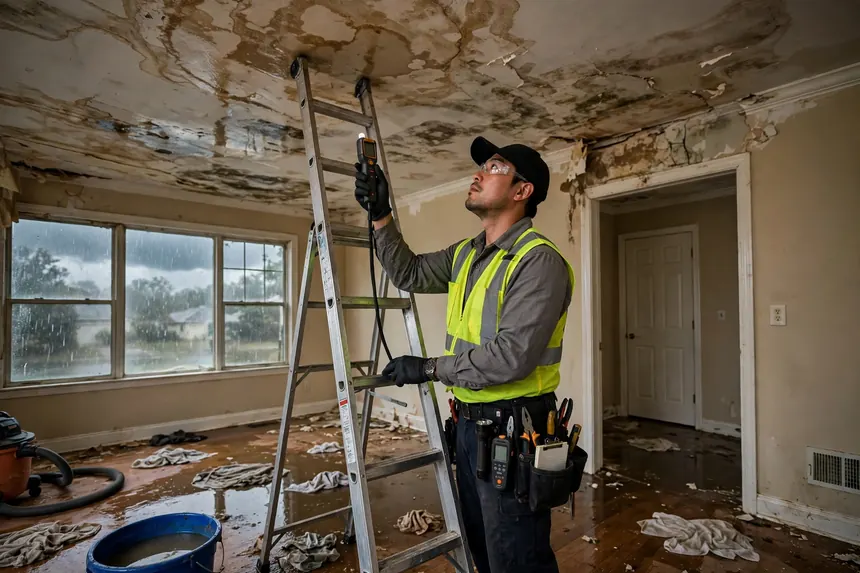
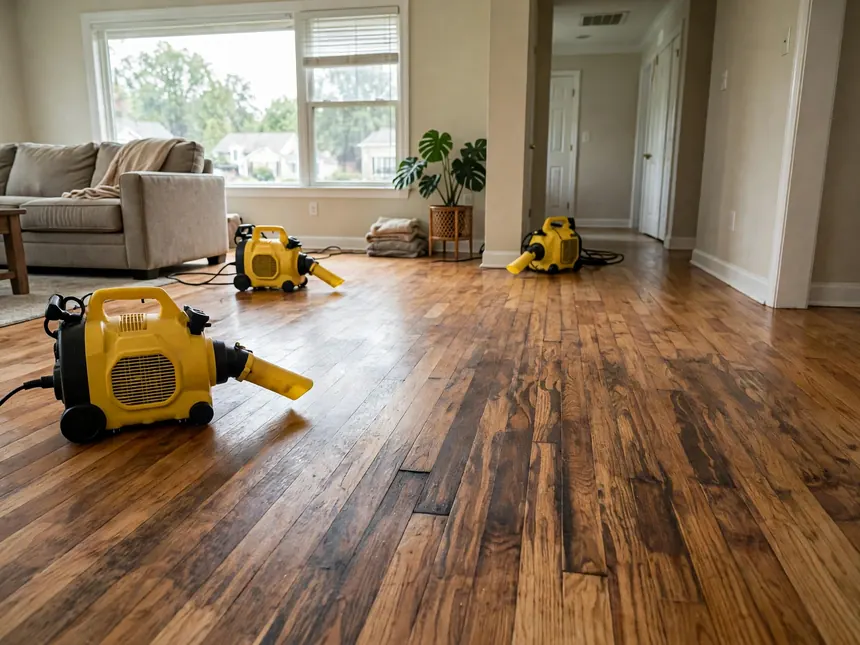
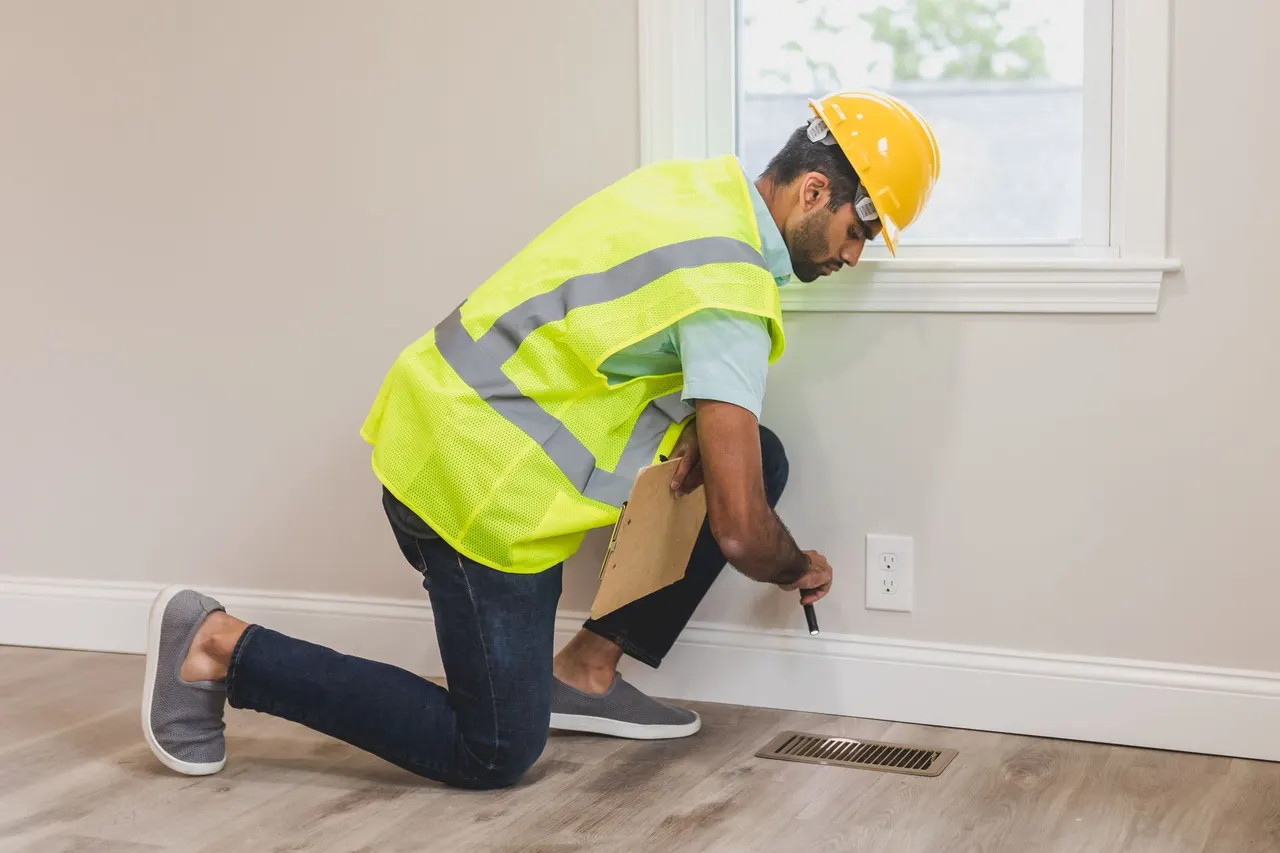
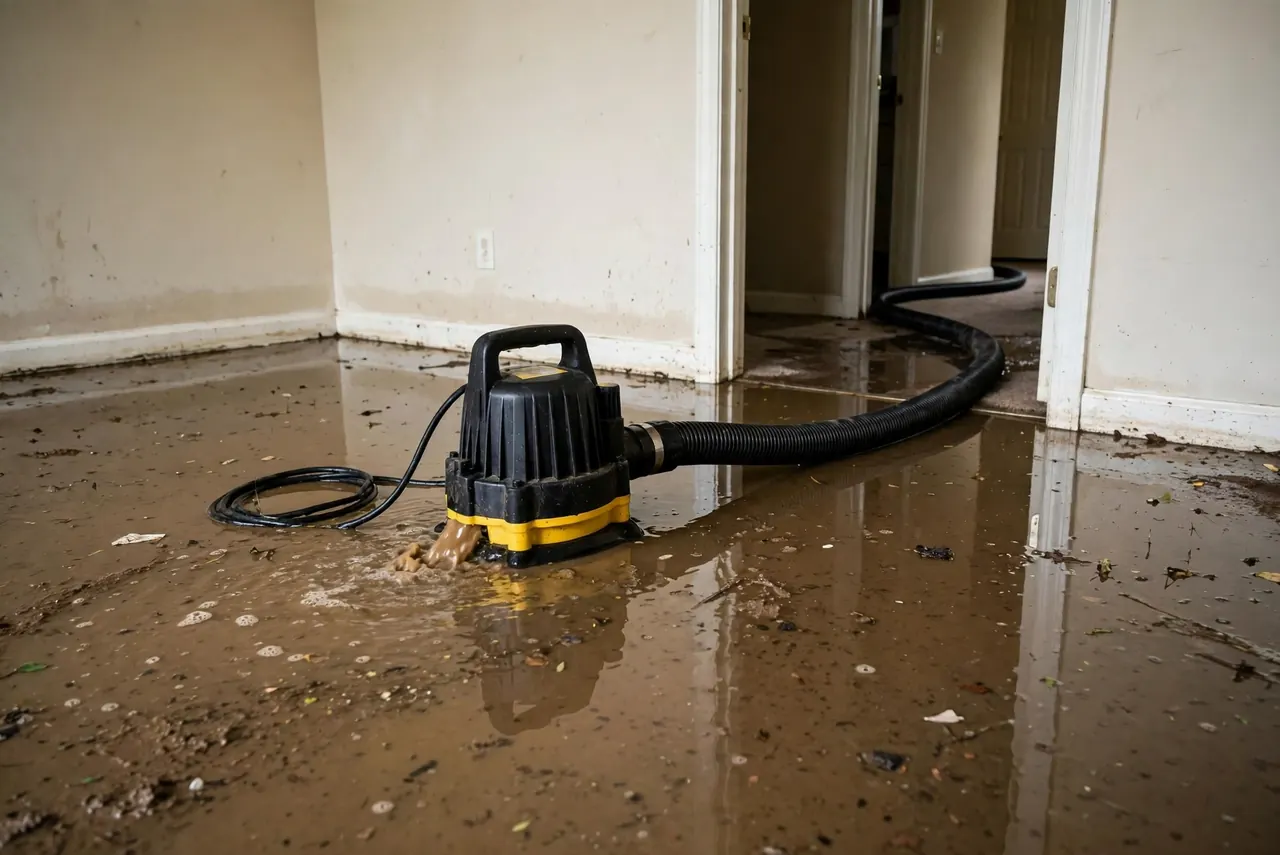
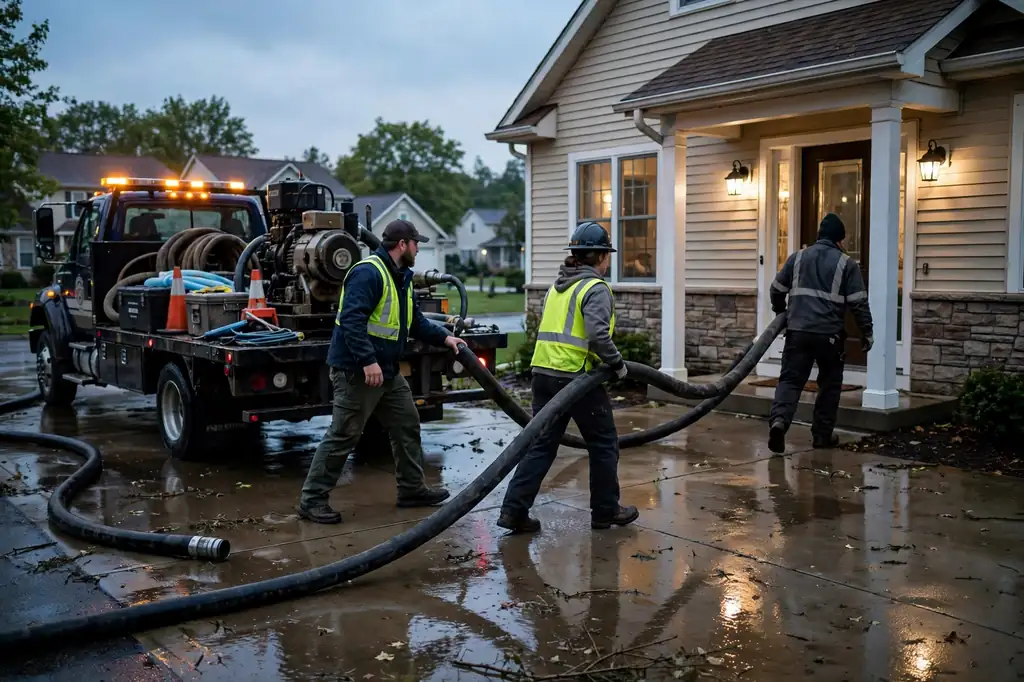
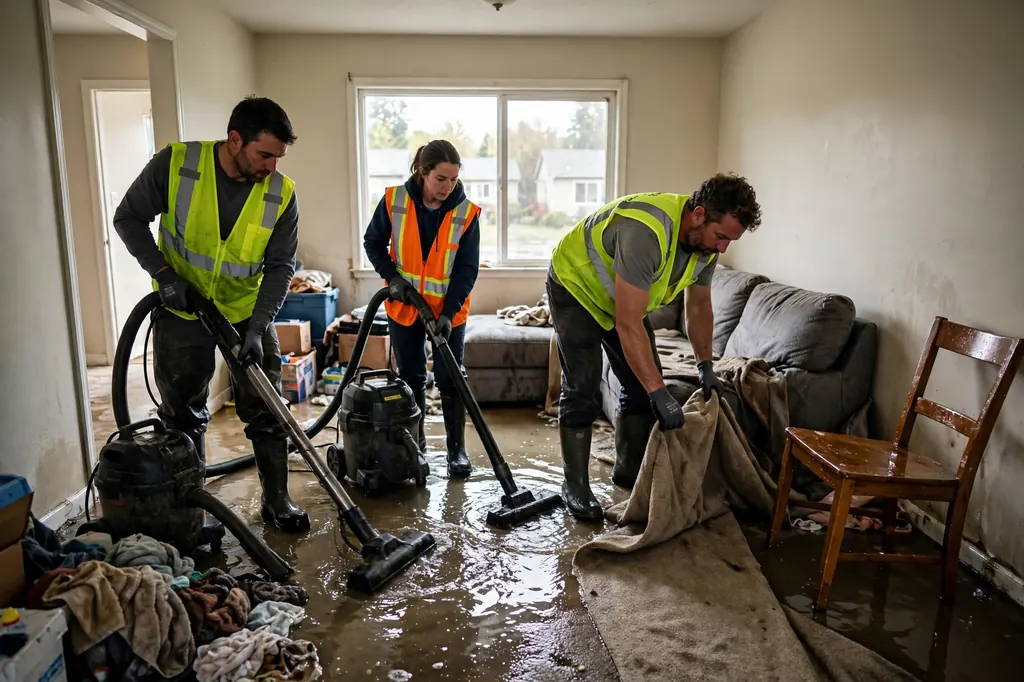
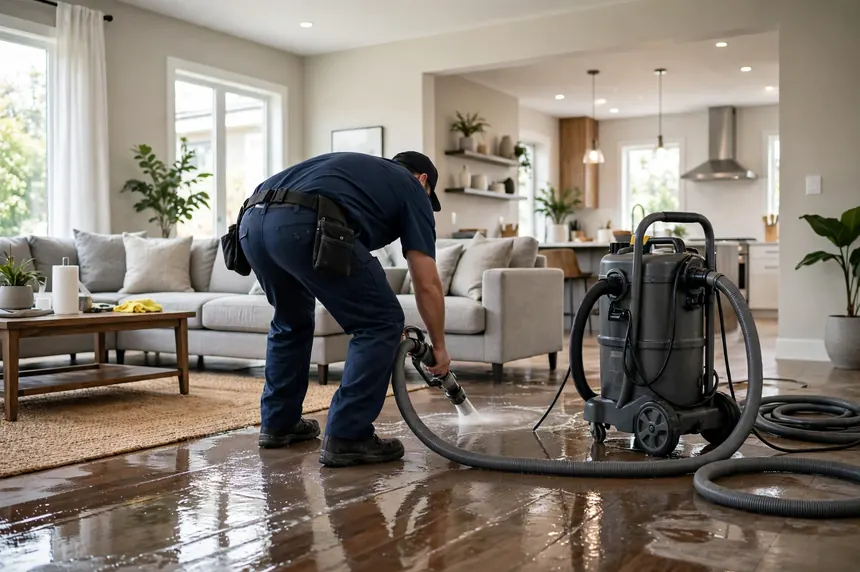
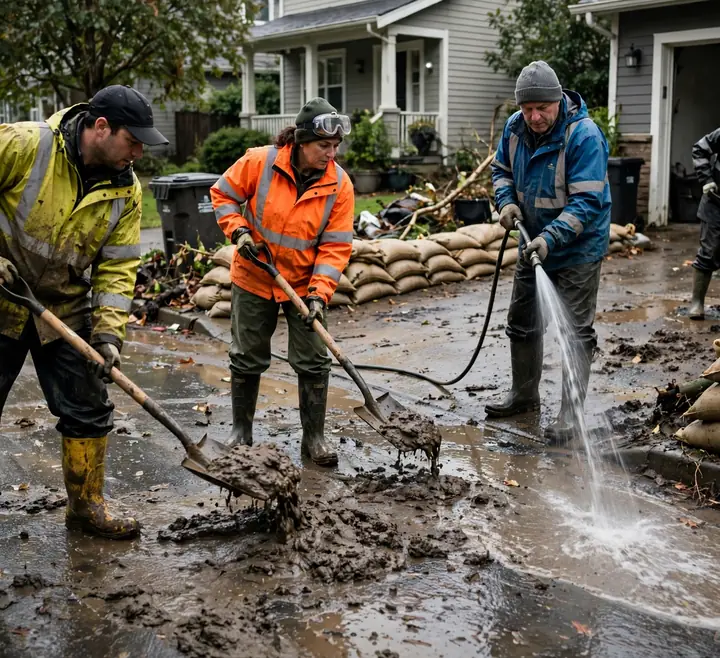
When a pipe breaks or water pushes into your property, emergency water damage repair in Kuna Town Center starts with stopping the source and removing standing water. We serve the Town Center core, Kuna Commons area, and nearby properties in 83634. Our team maps moisture, protects salvageable flooring and contents, and explains the next drying steps so you know what happens after the water is out.

emergency water damage repair in Kuna Town Center

Serving Kuna Town Center

  • Readings RecordedMoisture checks guide drying decisions
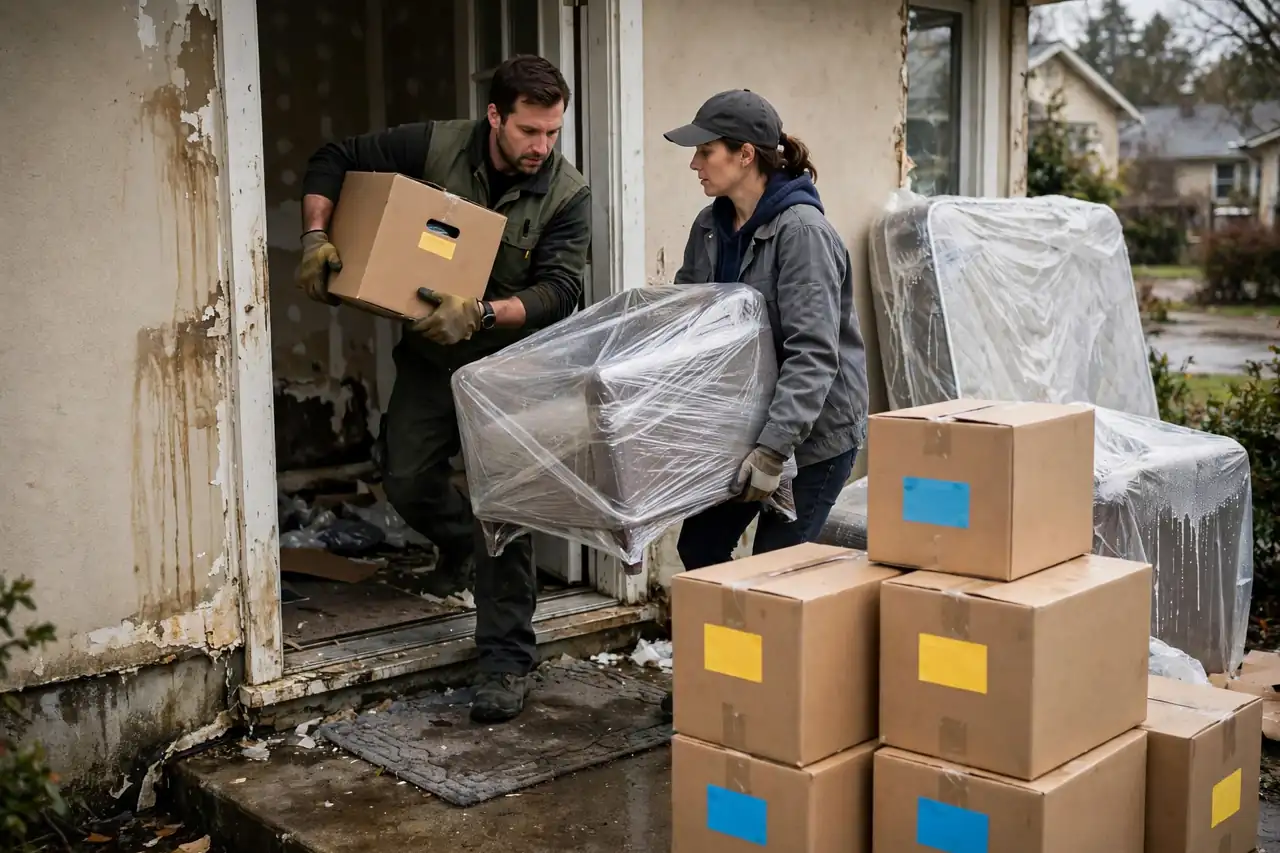
  • Work Area ProtectedContents moved away from wet surfaces
  • Steps ExplainedYou hear what happens next
  • Equipment CheckedAirflow placement reviewed during work

Emergency water damage repair in Kuna Town Center

Kuna Town Center mixes homes with shops and offices, and the water losses here cross thresholds in both directions: a burst pipe that wets walls, cabinets, and adjoining floors, and storm water that crosses a ground-level threshold and dampens finishes before anyone can sandbag or sweep it out. Mixed-use buildings also mean a leak on one floor becomes a ceiling stain on the one below.

We start by making the entry safe and stopping the supply, then we check the rooms above and below the wet one, because water in a town-center building rarely stays on one level. Readings across the affected floors set the drying plan, and the note we leave names the entry point and the drainage around it, so the next storm does not repeat the loss.

Kuna's Town Center is the newer commercial core of a city that grew from a railroad and farming town into a Boise-metro community of more than 30,000. SH-69, Meridian Road, runs north-south through town as the main artery to Meridian and Interstate 84, and crews route from the Kuna base along it.
Water Damage Services in Kuna Town Center

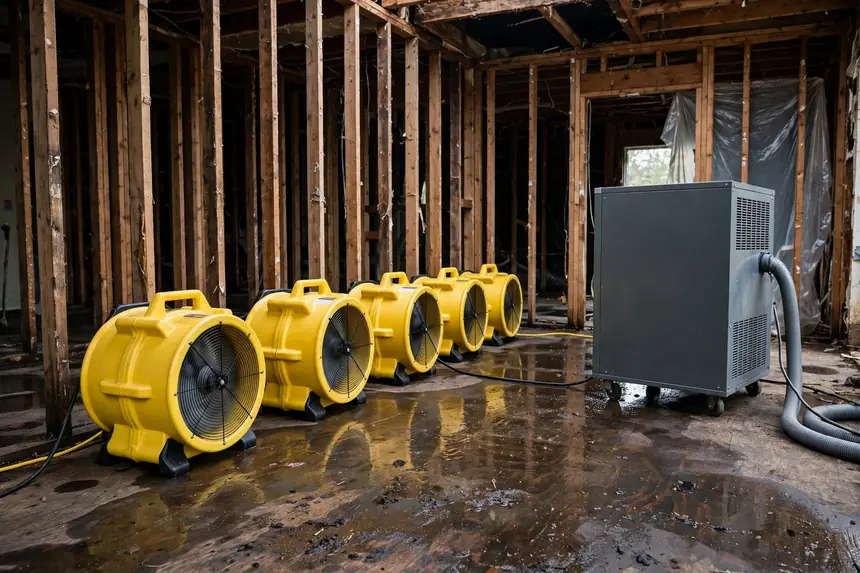
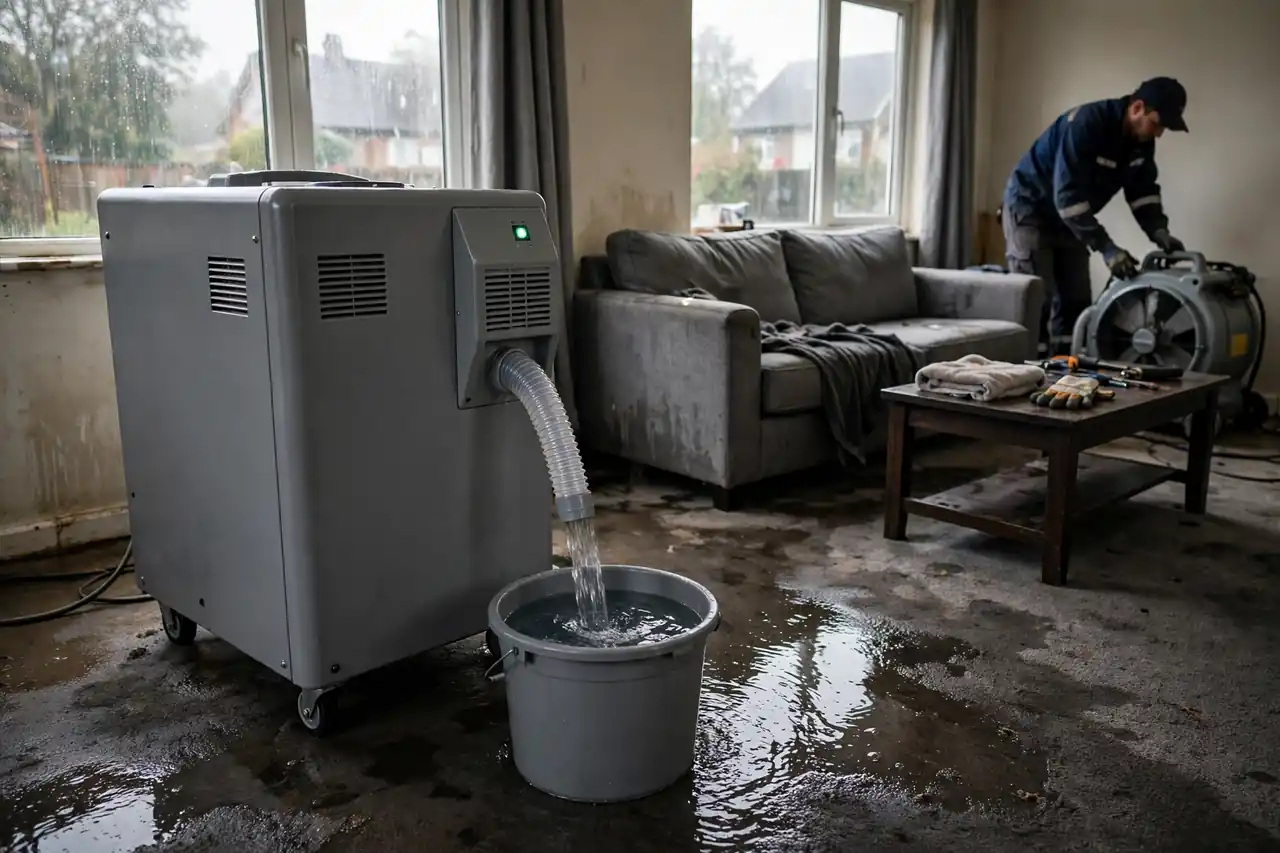
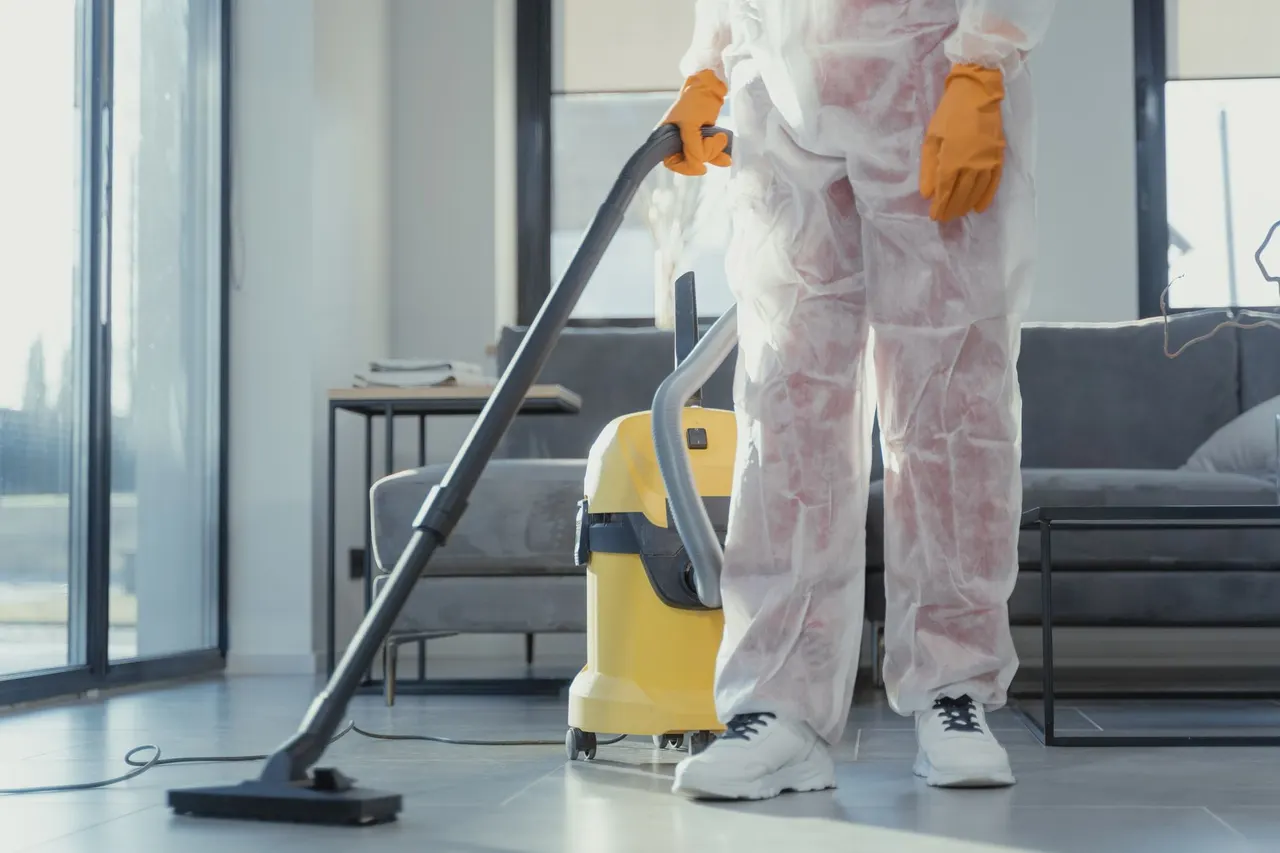
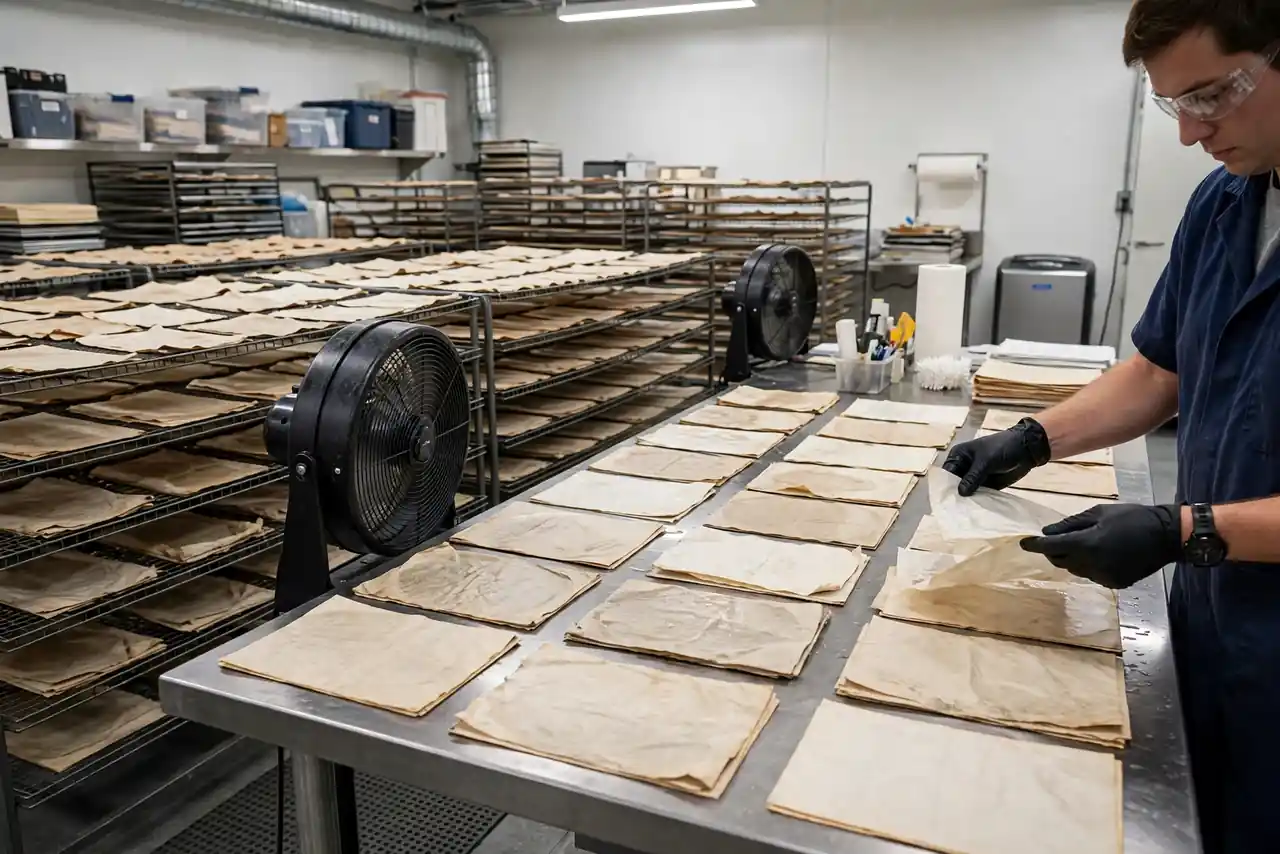
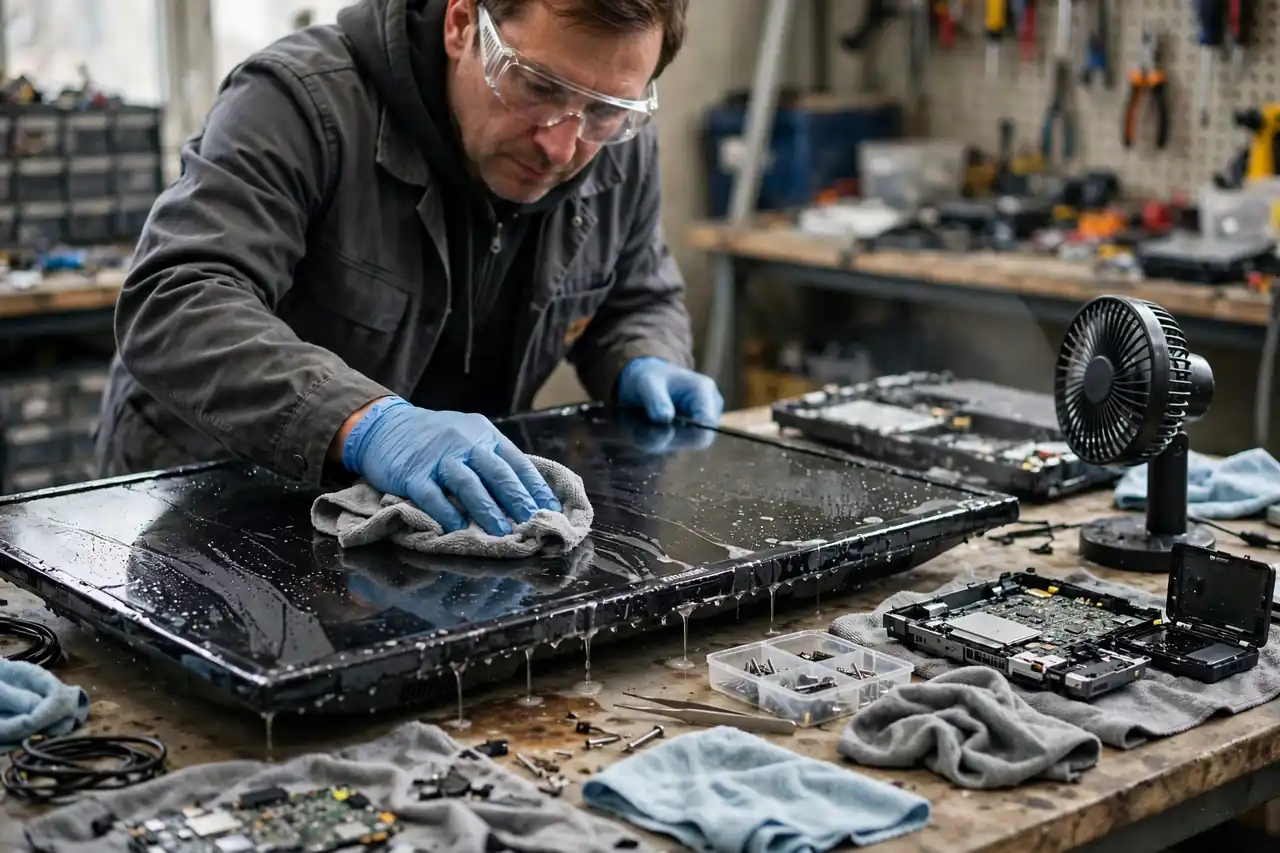
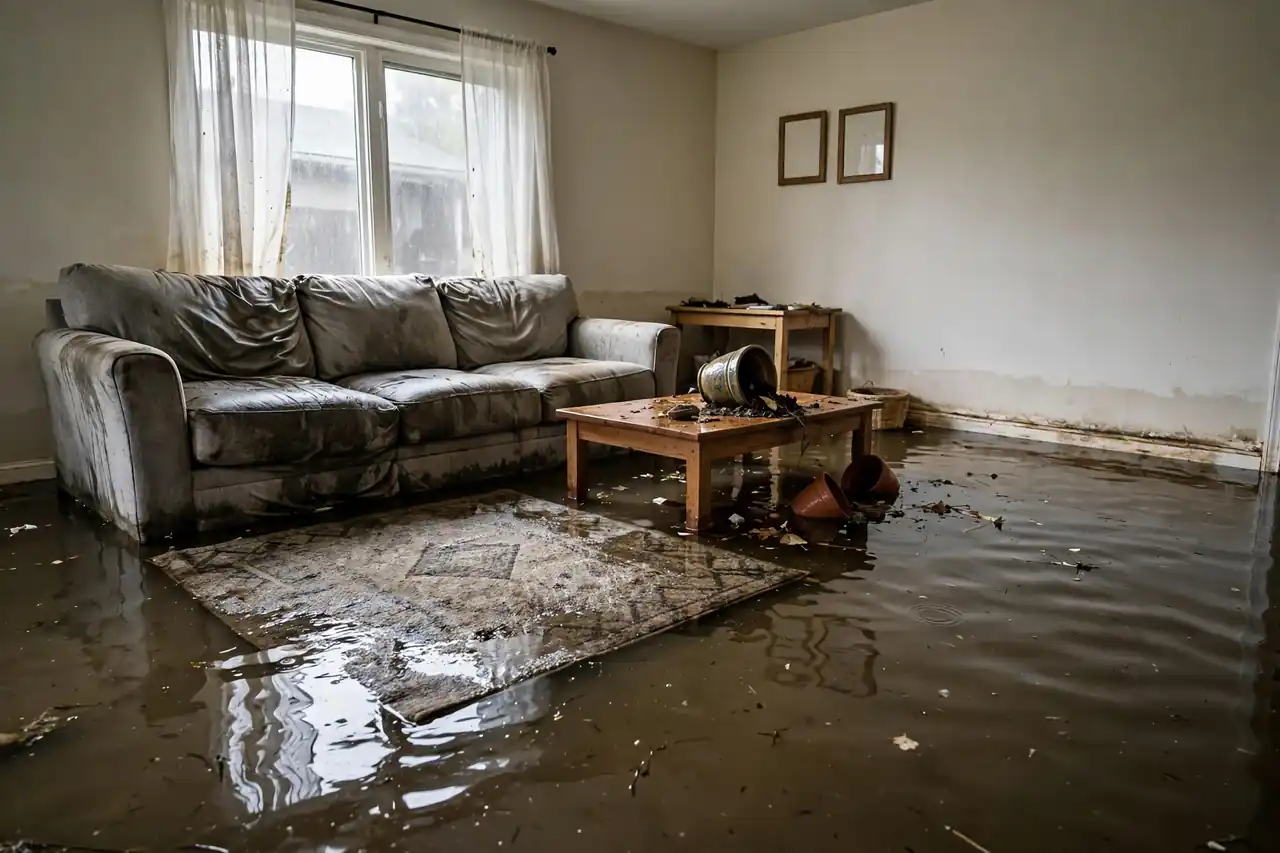
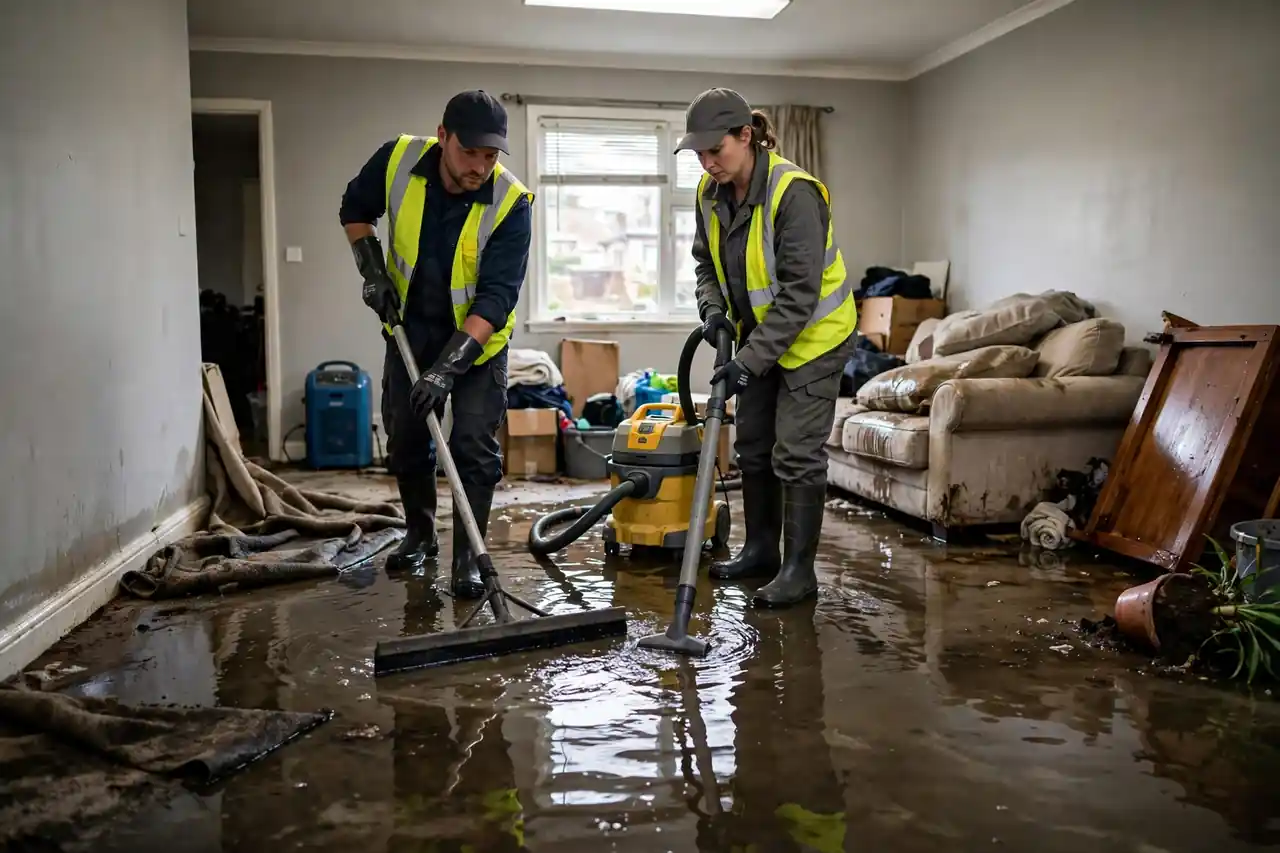
Kuna Town Center emergency water damage repair covers the first response and the steps that make a building dry again. We extract standing water, inspect affected materials, set drying equipment, and return to measure progress rather than relying on touch alone. Call for emergency water extraction near Kuna Town Center ID after a supply-line break, appliance overflow, or storm intrusion. We also handle the related repairs and cleanup, from wet carpet and ceiling stains to crawl spaces and contents. Tell us whether the property is residential, retail, or mixed-use, and we will plan access and equipment placement around your entry and operating hours.

Water Restoration Services Nearby

Emergency Restoration in Kuna Town Center

Emergency Restoration in Kuna Town Center

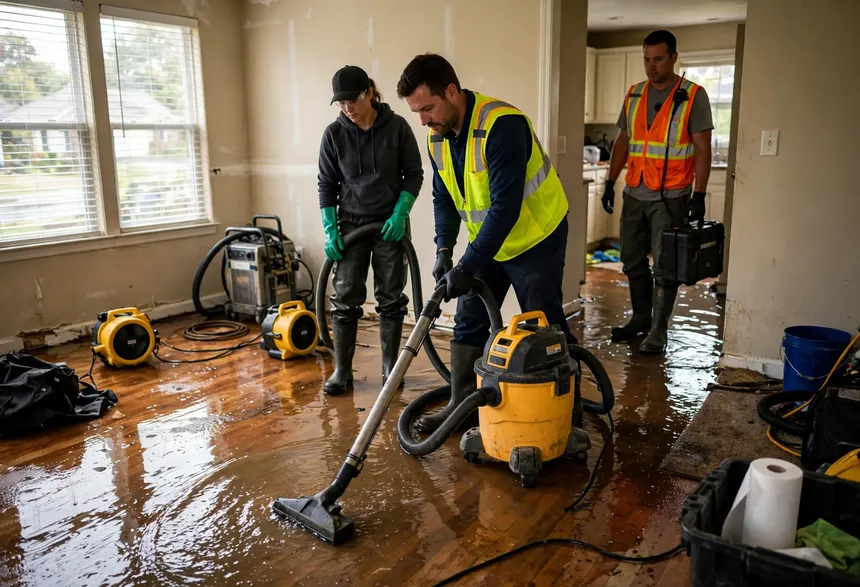
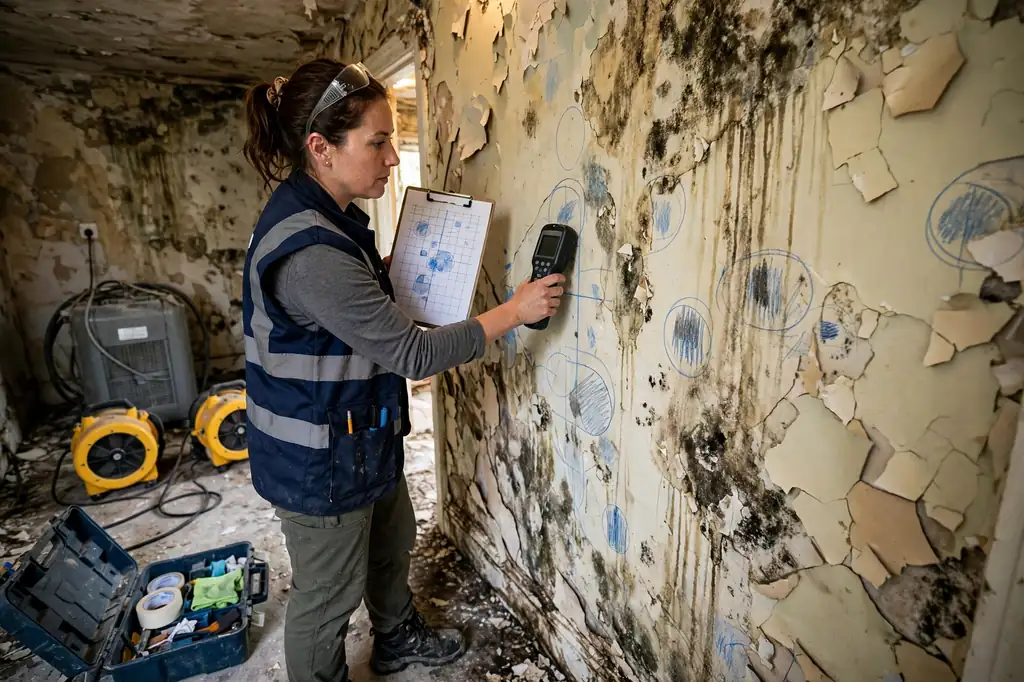
We inspect the source and affected rooms before placing equipment in Kuna Town Center properties. Mixed-use layouts make it important to check adjoining suites and the space below a leak. We record moisture readings, remove standing water, and set a drying plan around your access needs.

  • Source and hazard check
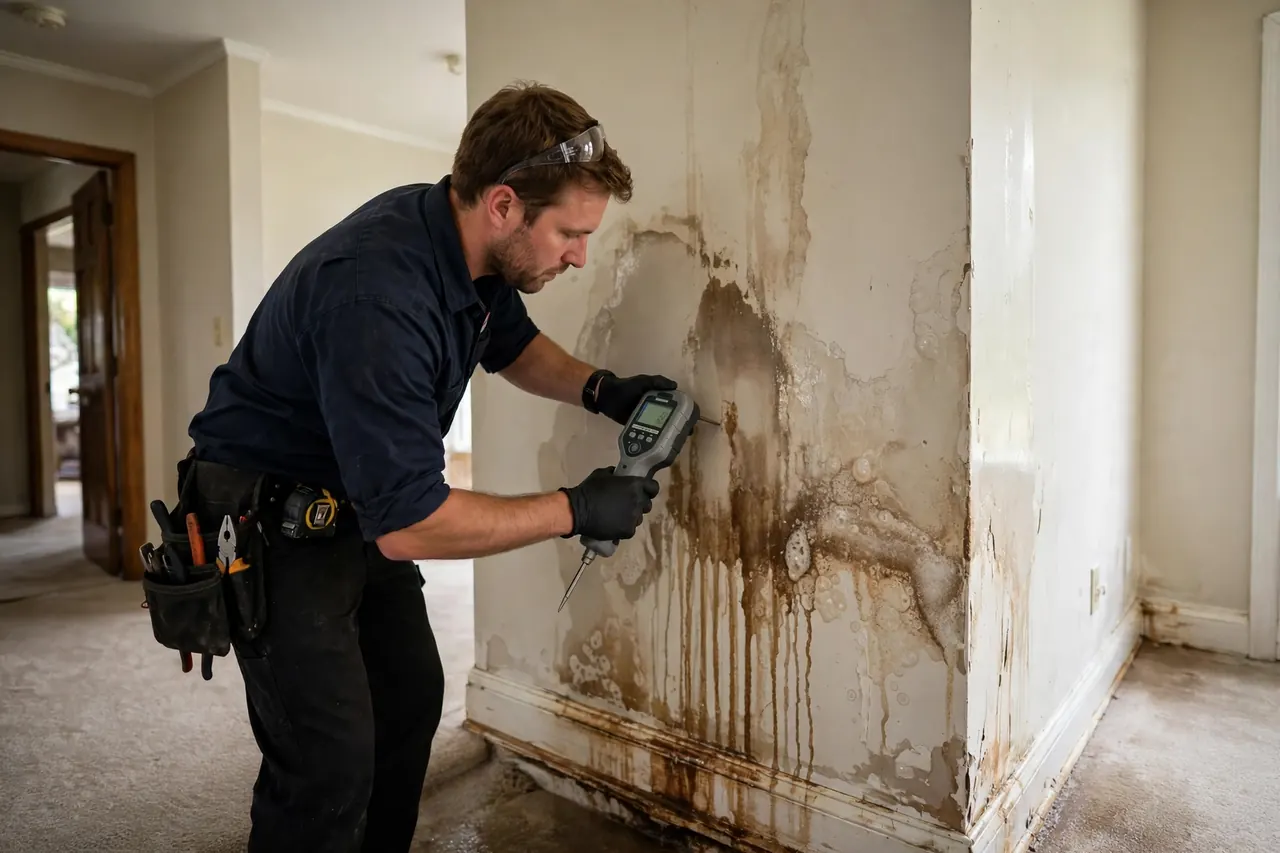
  • Room-by-room moisture map
  • Measured drying follow-up
For Kuna Town Center Homes

For Kuna Town Center Homes

We handle leaks and flooding in homes throughout Kuna Town Center, from kitchen supply failures to wet lower levels. We protect the dry rooms, inspect affected materials, and explain the steps before repairs.

  • Single-family homes
  • Town Center residences
  • Basement water events
  • Kitchen and laundry leaks
For Local Businesses

For Local Businesses

We plan water removal around suite access, customer routes, and the materials affected in Kuna Town Center businesses. We document the wet boundary and keep work organized while practical operations continue.

  • Mixed-use buildings
  • Retail suites
  • Office interiors
  • Ground-level entries

Common Water Damage Problems Locally

In the Town Center, water moves between floors and across thresholds, so these four lead: burst pipes, storm water at ground level, roof leaks above ceilings, and pump failure below grade.

  • Storm Water Crosses Thresholds and Soaks Ground Floors

    Storm Water Crosses Thresholds and Soaks Ground Floors

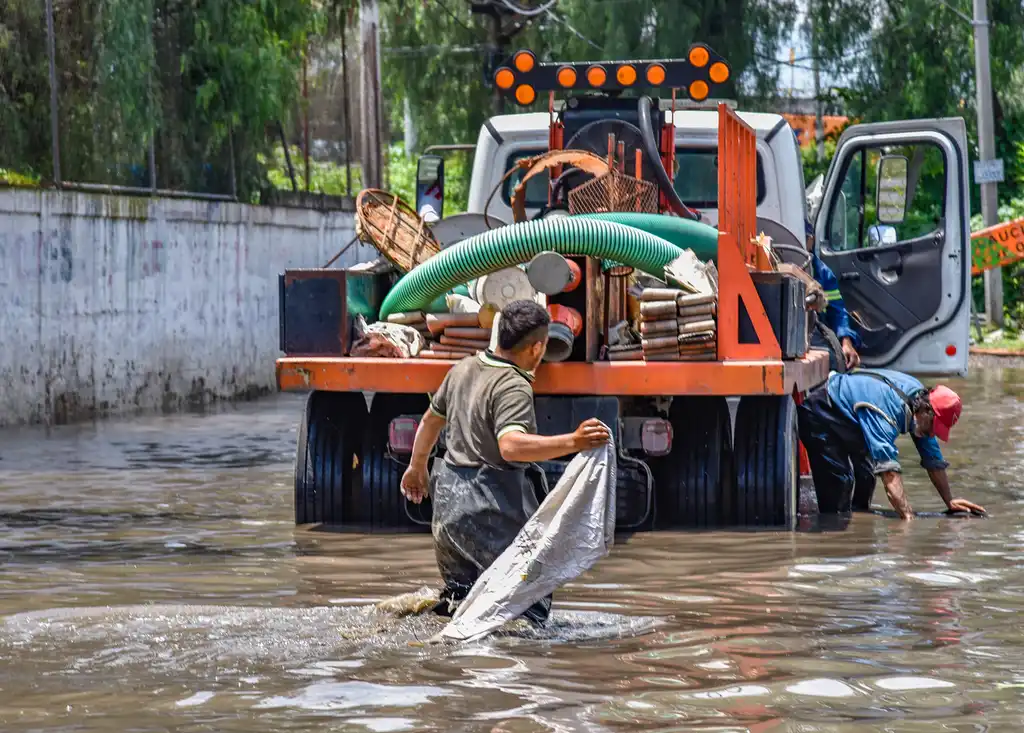
    A hard Treasure Valley storm can push water under doors, through low vents, and across patios faster than it can drain away, and the ground floor takes the hit. In Kuna Town Center, we start by making the entry safe and removing standing water, then check how far it travelled under flooring and into wall bases. Storm water is treated as potentially contaminated, so the handling differs from a clean supply-line leak, and we document the rooms and materials before drying begins.

  • Crawl Space Water and Dampness After Wet Weather

    Crawl Space Water and Dampness After Wet Weather

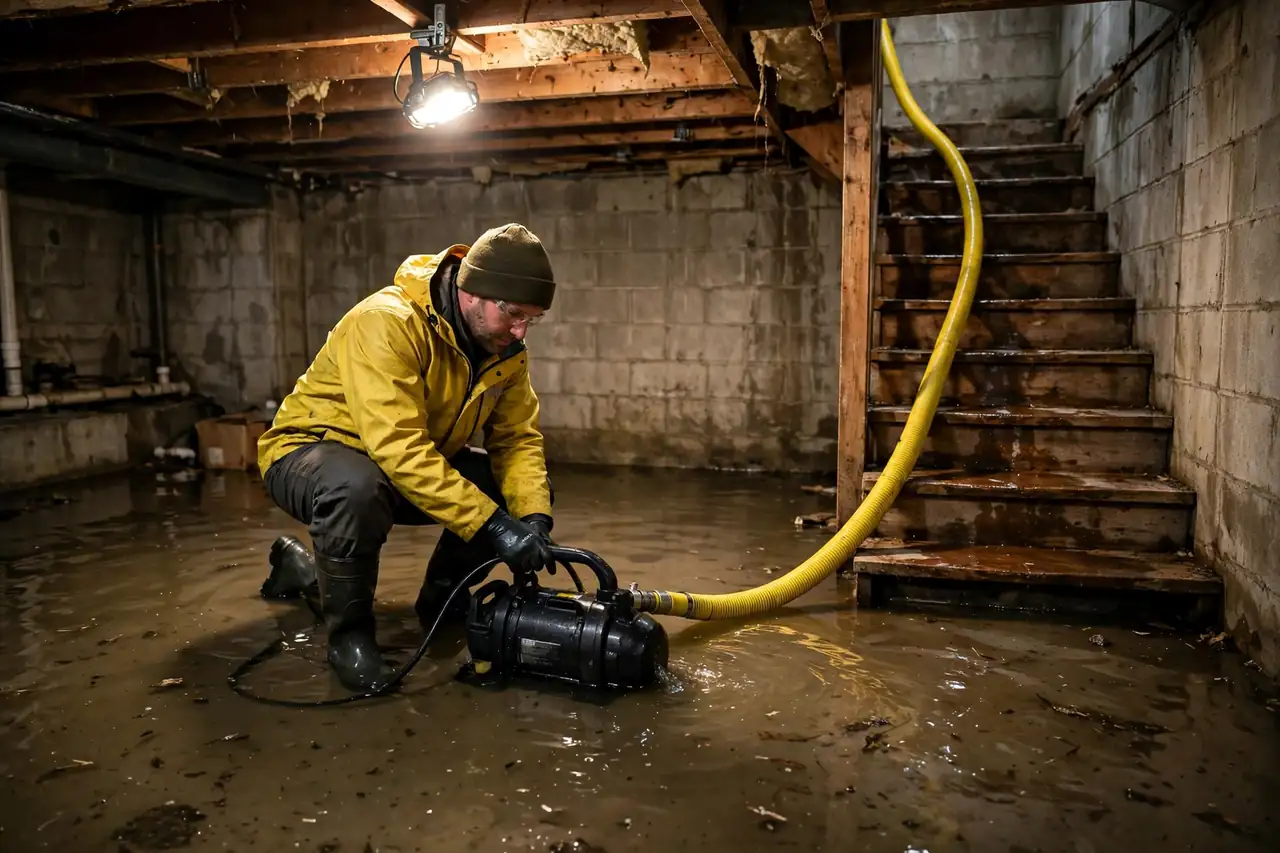
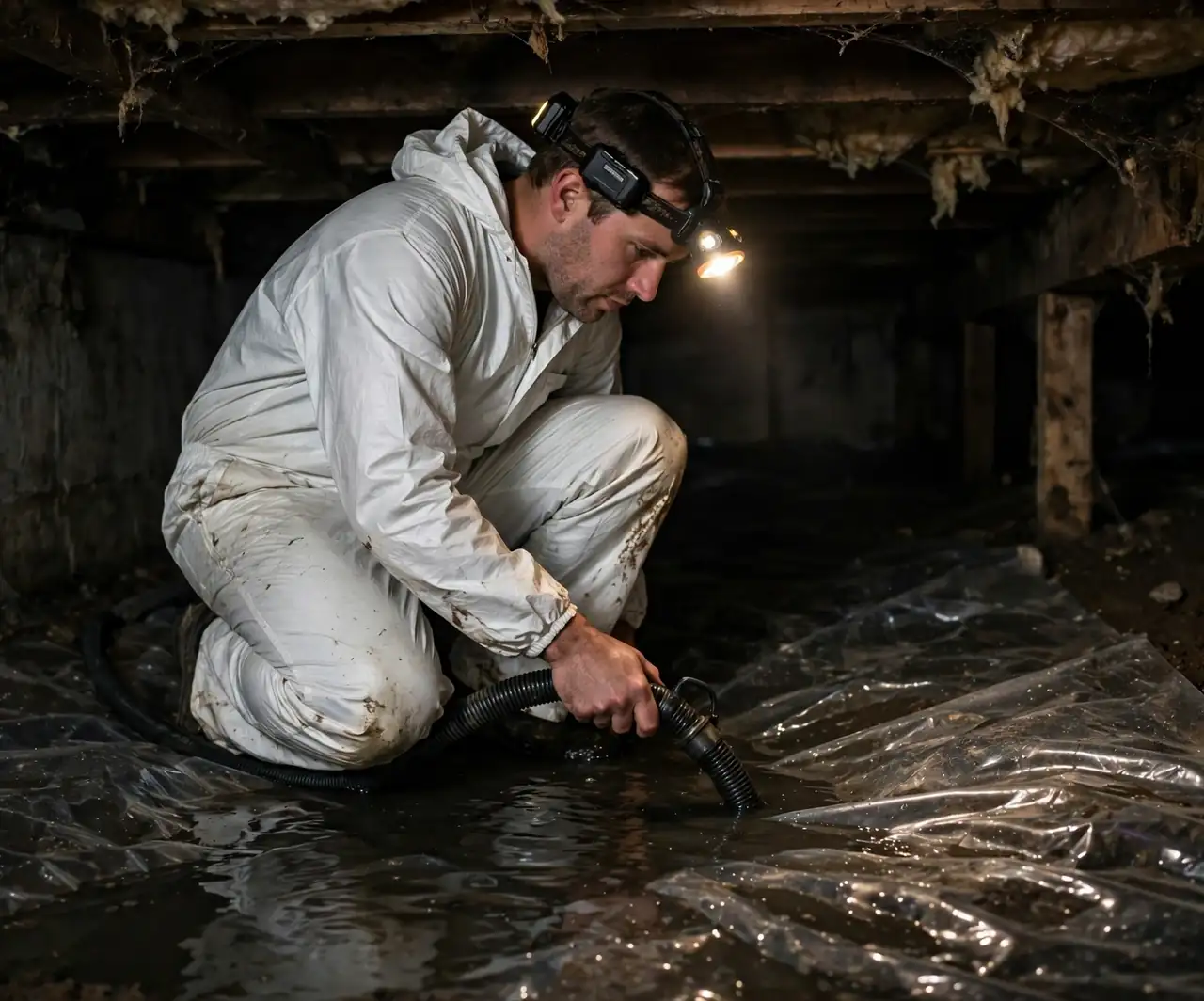
    A crawl space in Kuna Town Center can hold water for weeks after a leak or a wet spell, quietly raising humidity and wetting floor joists from below. We look for the source first — a supply line, a drain, or water running in from outside — then pump out what is standing and measure the wood and insulation. Drying a crawl space is slower than drying a room, so we set equipment from readings and re-check, rather than guessing the space is dry because the surface looks fine.

  • Garage and Utility Spaces Hide Slow Leaks

    Garage and Utility Spaces Hide Slow Leaks

    Garages and utility rooms hold water heaters, softeners, and laundry connections, and a slow leak there can run under stored items for weeks unnoticed. In Kuna Town Center, we check the water heater base, the softener drain, and the laundry connections first, then read the concrete and the adjoining walls, because concrete wicks water further than it appears. Extraction and drying follow the readings, and we flag which connection needs a plumber before the space is put back to use.

  • Sprinkler and Irrigation Water Reaches the House

    Sprinkler and Irrigation Water Reaches the House

    A sprinkler line that breaks during an irrigation cycle can deliver a surprising amount of water toward a home in Kuna Town Center. The tell is timing: the wet area appears or grows after watering, and the entry point is usually a threshold, a low vent, or a foundation edge. We confirm the source, stop the zone, and map how far the water travelled under flooring before setting air movers, so the drying plan matches the real wet area rather than the visible one.

When to Call for Water Damage Help

Look for these specific warning signs in Kuna Town Center before water spreads into adjoining rooms.

  • Water continues pooling after the supply is shut off

    A continuing puddle can mean the source is not fully isolated or water is draining from a concealed area. Shut off the affected supply if it is safe, keep clear of electrical hazards, and call for extraction. We identify the source path and check neighboring materials rather than removing only the visible water.

  • Ceiling paint bubbles or begins to sag

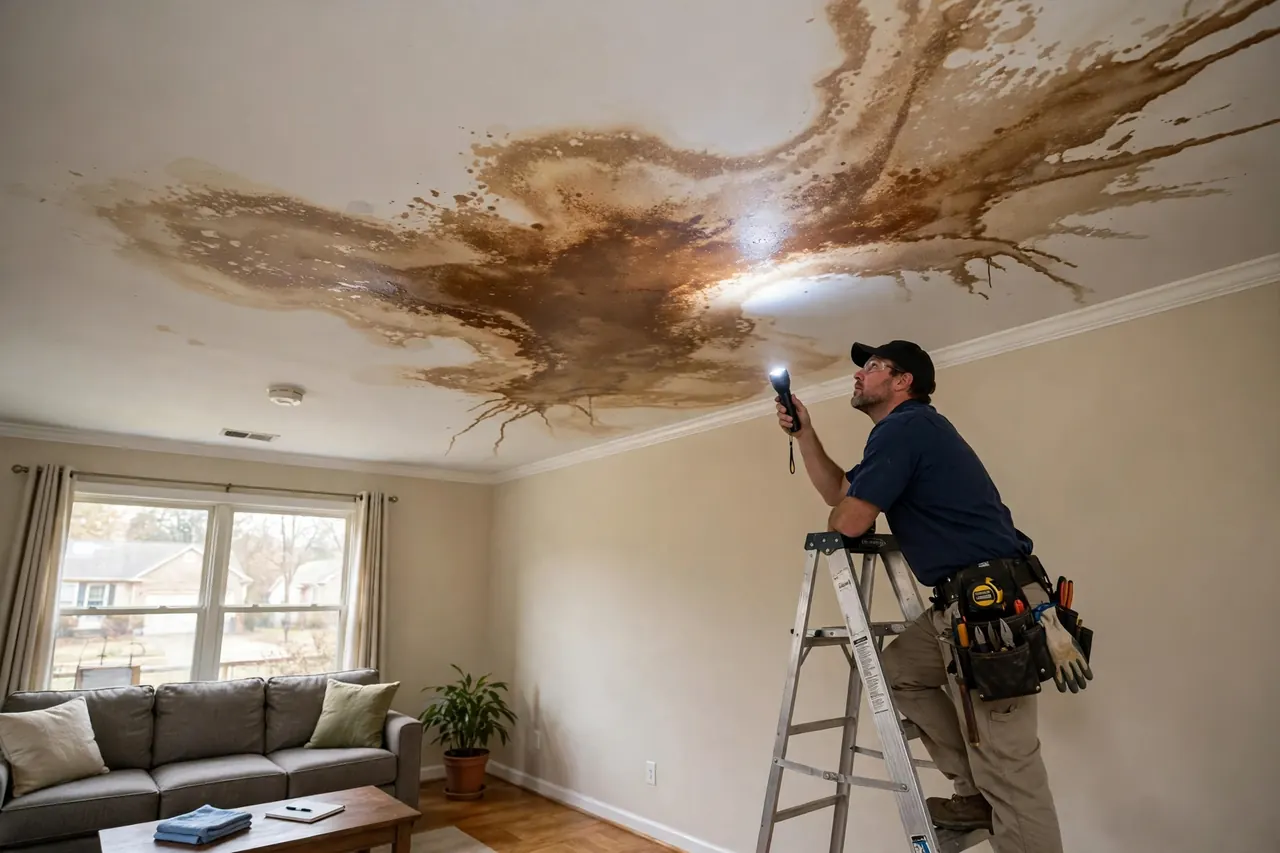
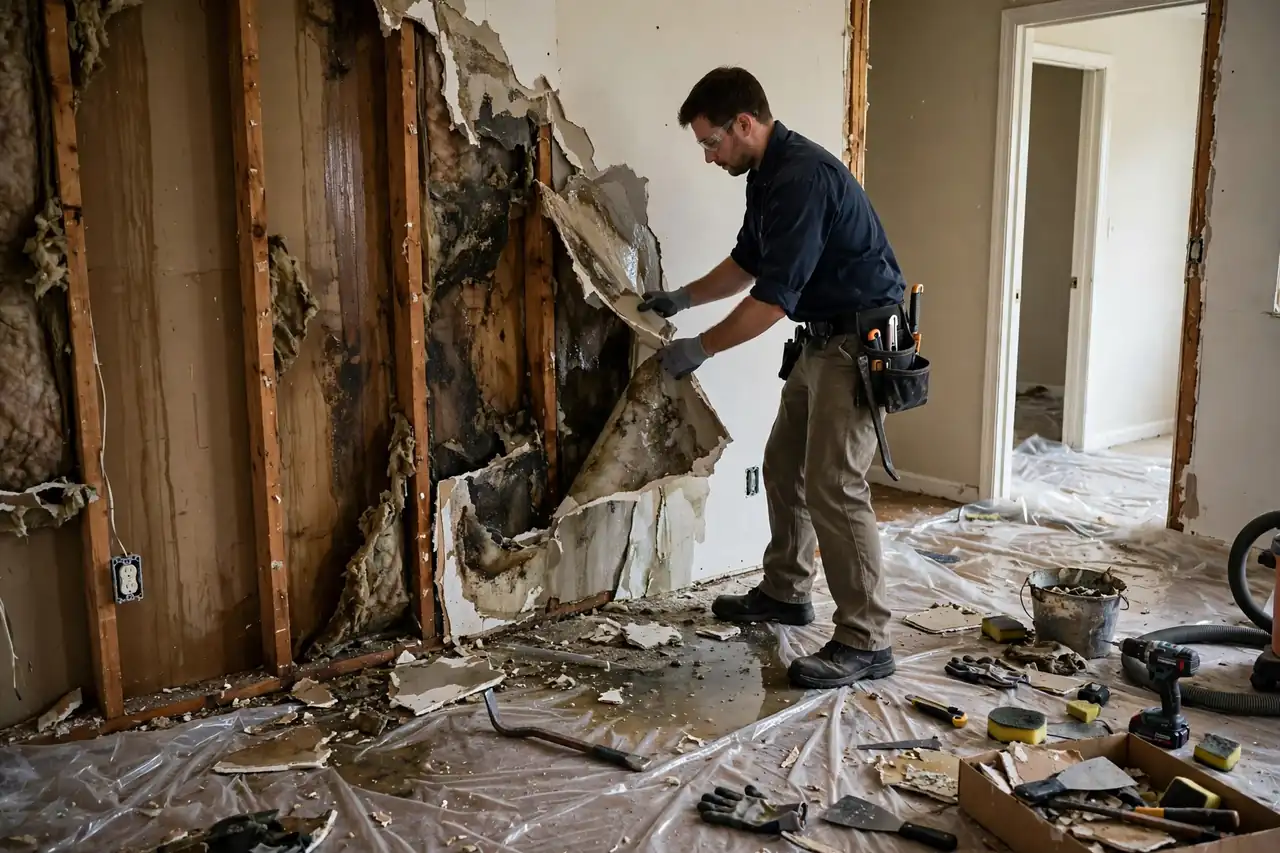
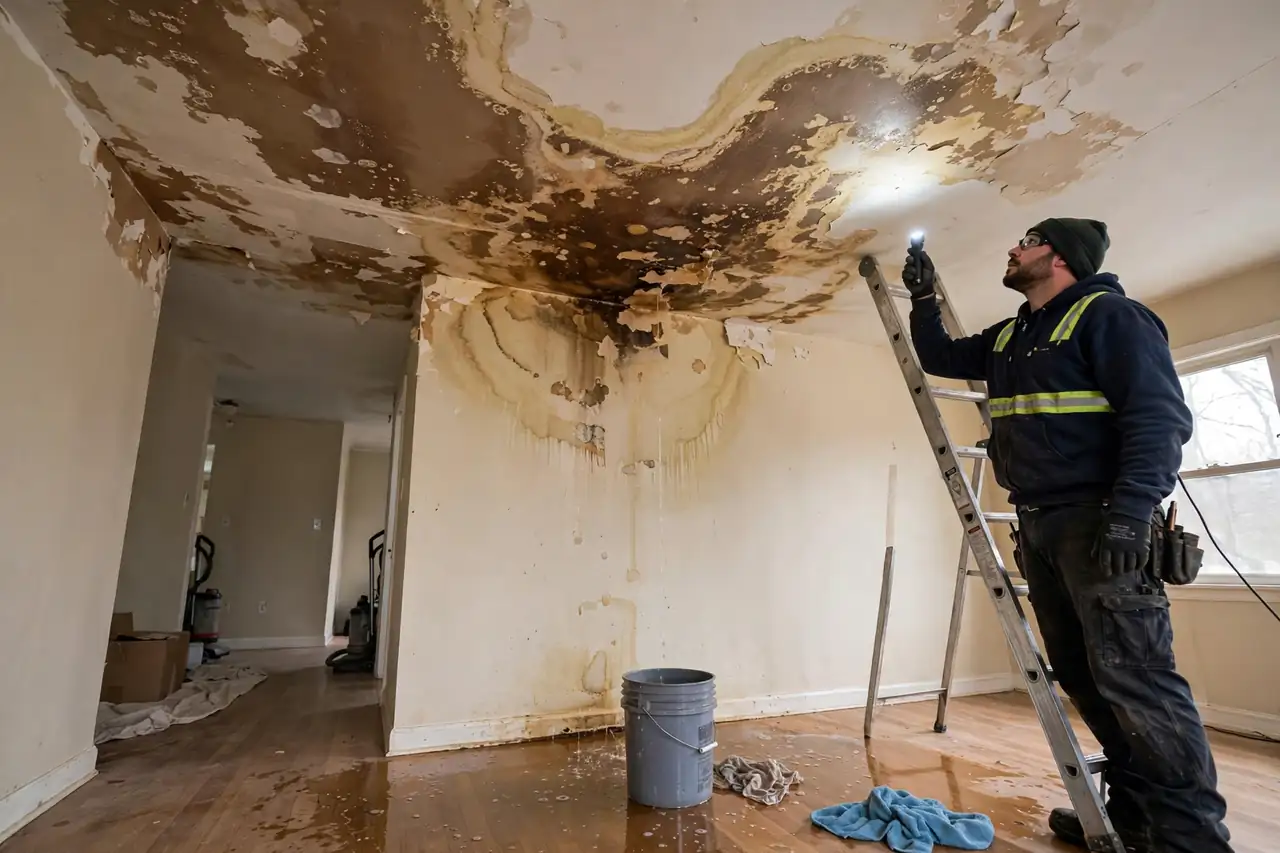
    A soft or bulging ceiling can hold water above the visible surface and may fail without warning. Keep people out from underneath and avoid puncturing it yourself. We inspect the source area, protect the room below, and determine whether the cavity and insulation are wet.

  • Hardwood boards begin cupping or lifting

    Raised board edges or gaps can signal moisture beneath the hardwood, even if the surface has been wiped dry. Prompt measurement helps determine whether water reached the subfloor. We check multiple points and use controlled drying when the material and conditions support that approach.

  • Musty odor appears after a leak

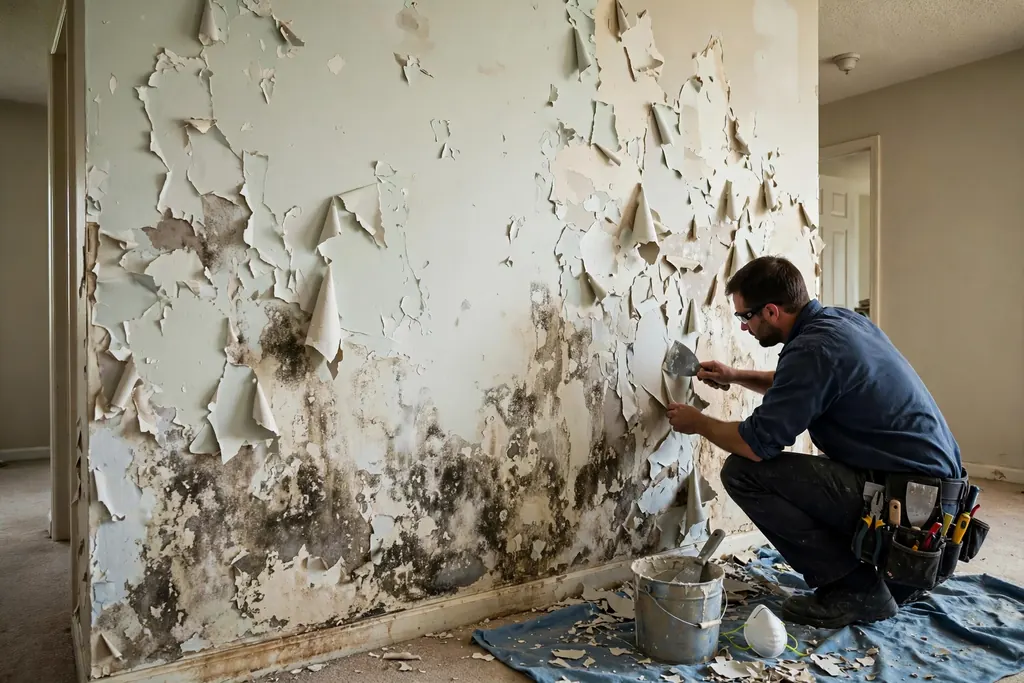
    A musty smell after water exposure can point to damp carpet padding, wall material, or a concealed cavity. Odor treatment alone will not correct the source. We trace moisture, identify affected materials, and set a drying or removal plan based on readings.

  • Water returns near a basement or crawl space

    Repeated water at the same low point may indicate foundation seepage, drainage trouble, or sump pump failure. Note when the water appears and where it collects. We remove standing water, inspect the entry pattern, and check the pump or drainage conditions before recommending follow-up work.

How We Work in Kuna Town Center

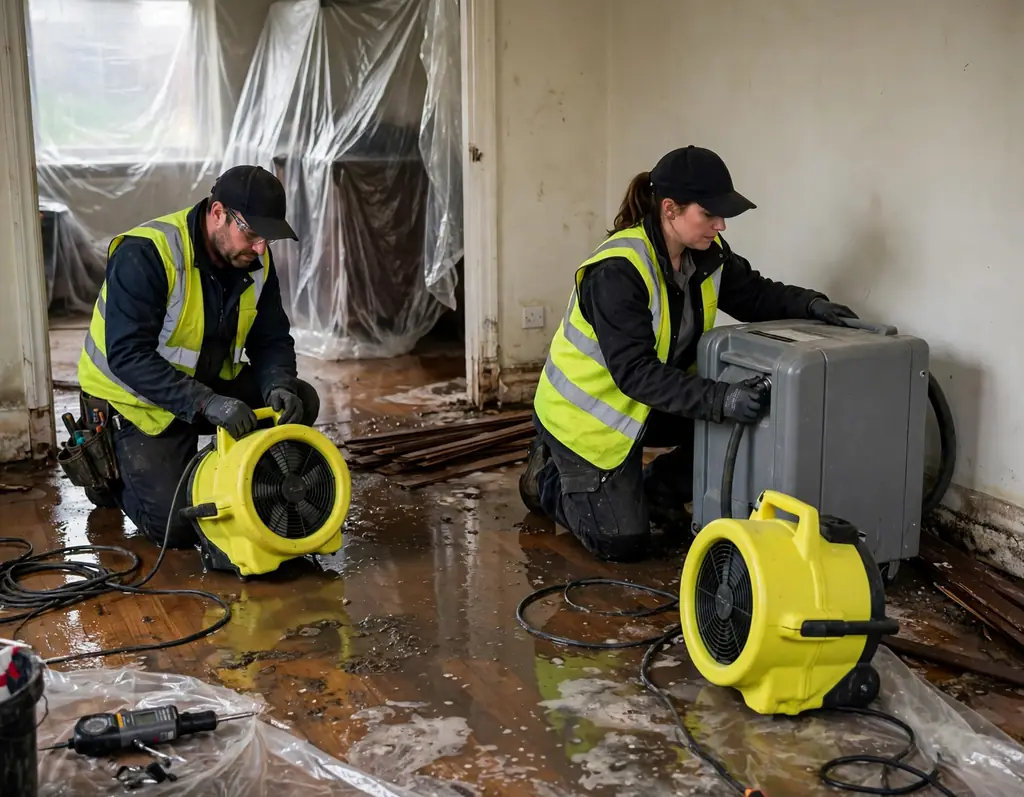
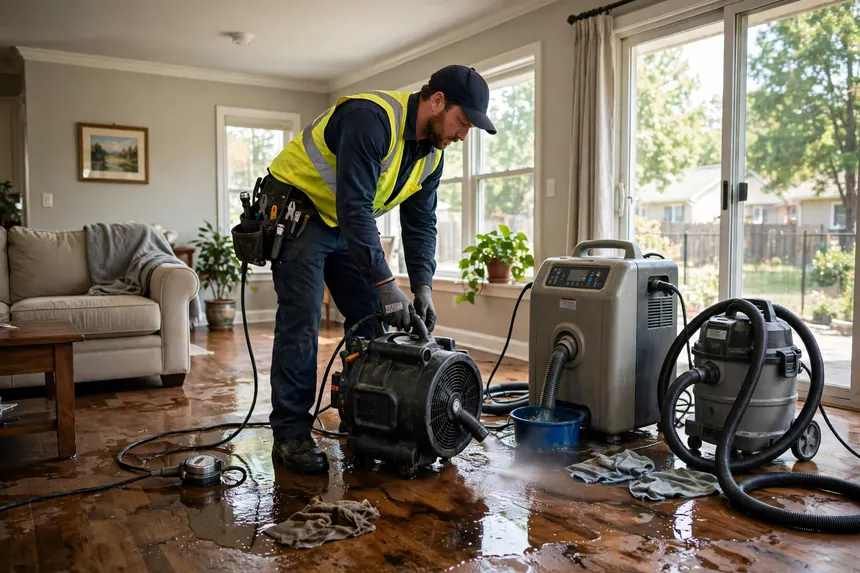
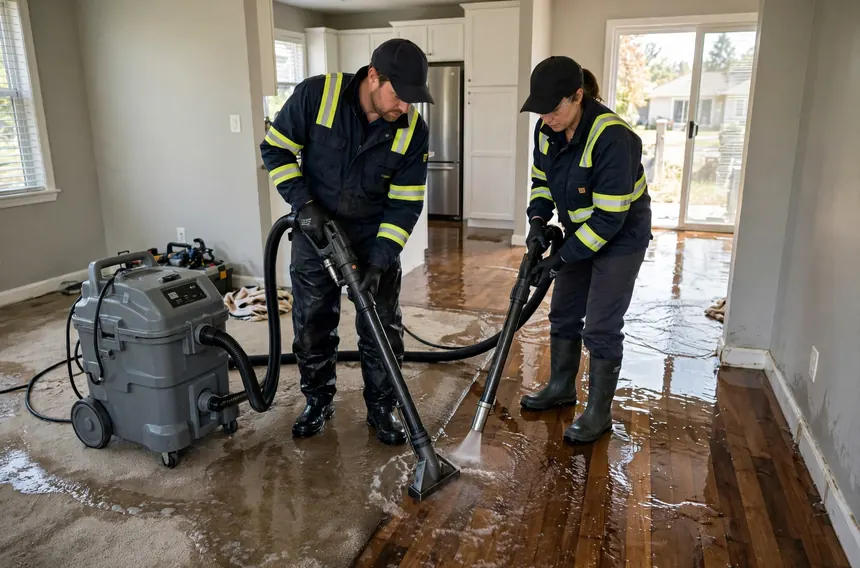
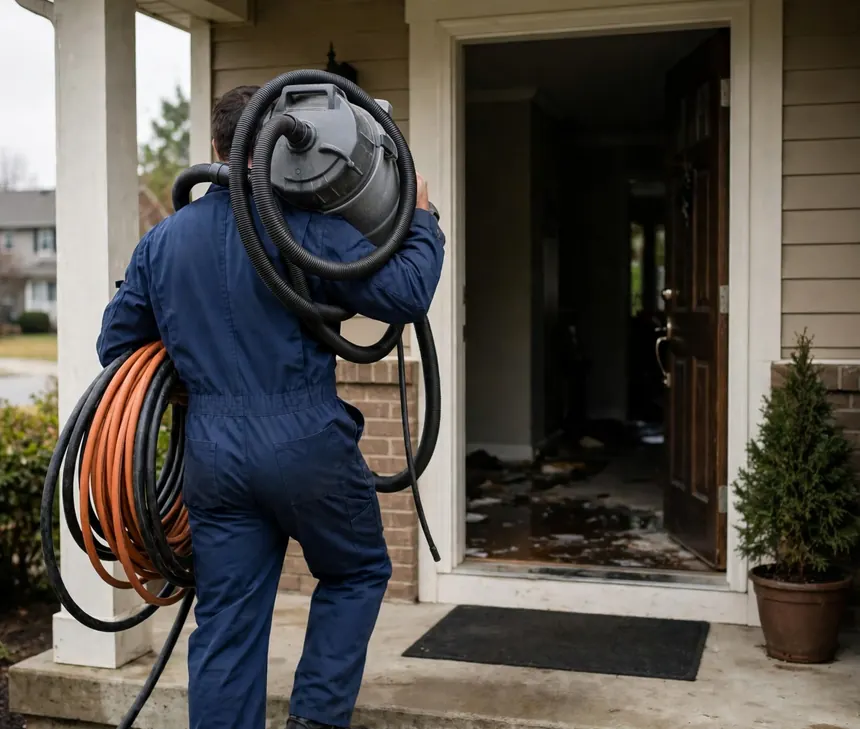
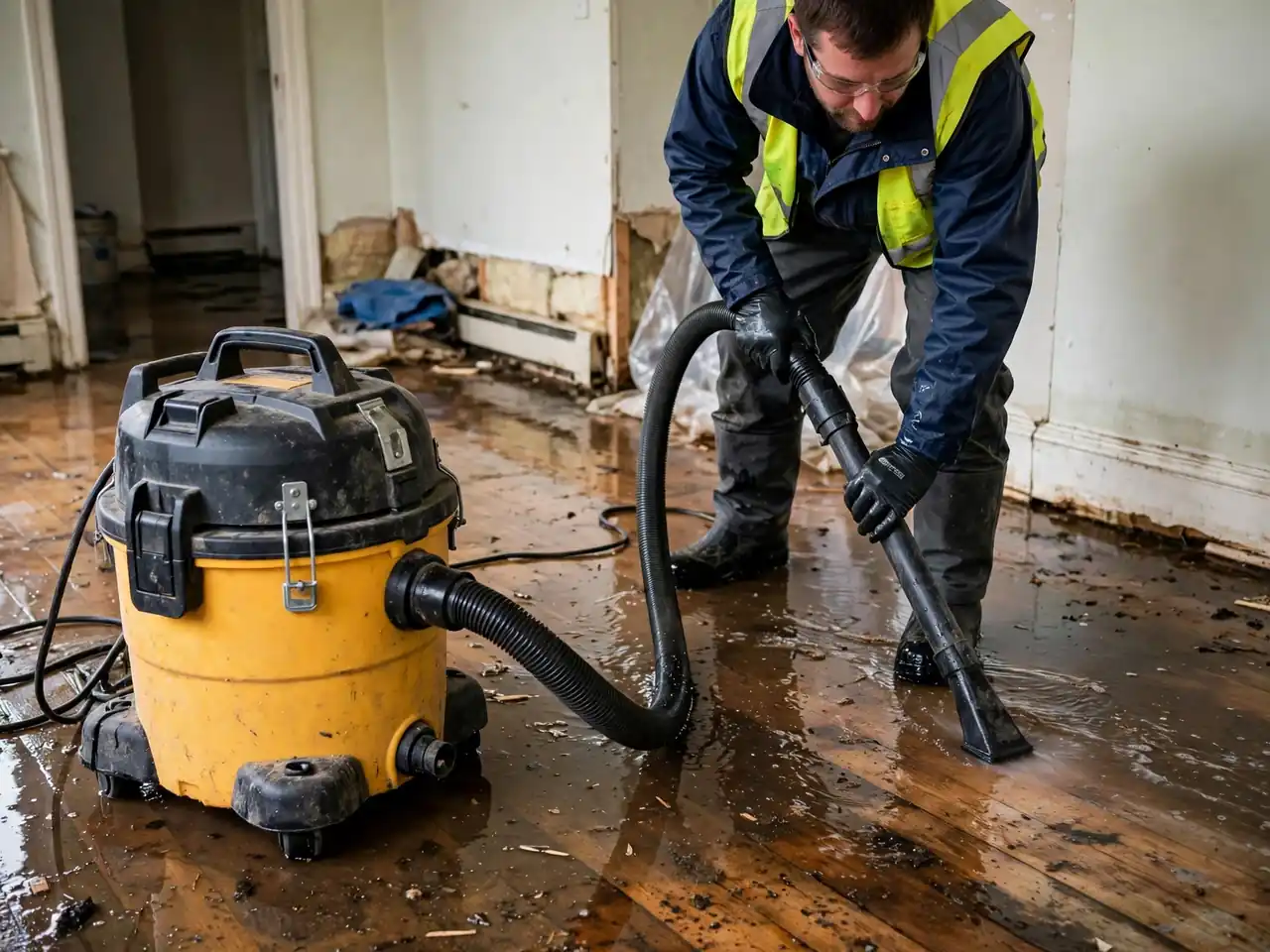
emergency water damage repair near Kuna Town Center begins with a call that identifies the address, entrance, water source, and any safety concern. We plan equipment loading for the Town Center core and commercial access near the local retail center, where parking and tenant traffic can affect staging. On arrival, we inspect the affected rooms, shut down or isolate the source when appropriate, and extract standing water before setting air movers and a dehumidifier. High parking lot runoff is a reason to inspect ground-level thresholds after a storm, not proof of where water entered. For same day emergency water damage repair Kuna Town Center ID, we prioritize active water and document the condition before materials are removed. We use moisture readings and follow ANSI/IICRC S500 principles for water restoration work. Drying checks are repeated, often every 24 hours, until readings support the next repair step. We protect paths through occupied spaces and explain what can remain in place versus what needs removal.

  • High parking lot runoff can reach ground-level thresholds during intense rain.

    Water at a commercial entrance can move beneath flooring or into wall bases before staff spot the source. The visible puddle may be smaller than the damp area underneath, so extraction alone does not show how far moisture traveled. We check the entry, nearby floor transitions, and wall edges, then map moisture beyond the visible water line. We remove pooled water, protect dry areas, and monitor readings as the assembly dries. You get a clear account of the affected boundary.

  • Mixed-use buildings can place occupied suites above or beside a leak.

    A plumbing failure in an upper suite may stain a ceiling below while water follows a concealed path. Shared corridors and tenant schedules also affect how equipment and materials move through the building. We identify the source area and affected units, coordinate safe access with the person on site, and contain the work zone. Moisture checks cover the ceiling, adjoining walls, and floor edges so the drying plan accounts for connected spaces rather than only the first stain.

  • Cold winter nights can expose vulnerable plumbing to freezing conditions.

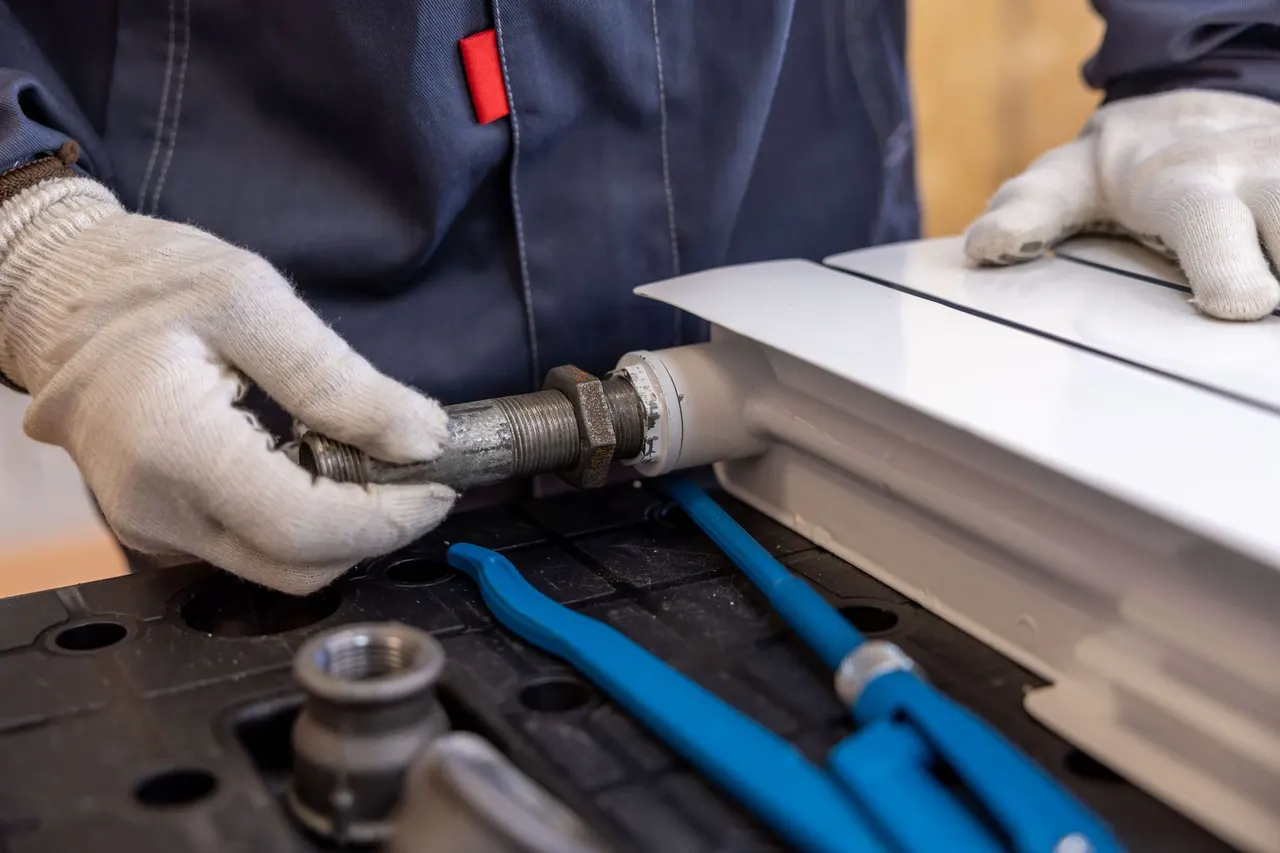
    A frozen pipe may split and release water when it thaws, wetting cabinets, walls, and floors quickly. A small opening can continue leaking after the initial pressure change, so source control matters before drying starts. We help isolate the affected supply, remove water, and inspect nearby materials for hidden spread. We record moisture in the wall and floor assembly, then set drying equipment based on those readings. A plumber can address the pipe while we manage the water damage.

  • ANSI/IICRC S500 Standard for Professional Water Damage Restoration

    We use the S500 framework to organize inspection, water removal, drying, and documentation. The standard helps guide decisions about affected materials and monitoring; it does not replace local building requirements or the specific conditions found at your Kuna Town Center property.

  • EPA Lead-Safe Renovation, Repair and Painting requirements

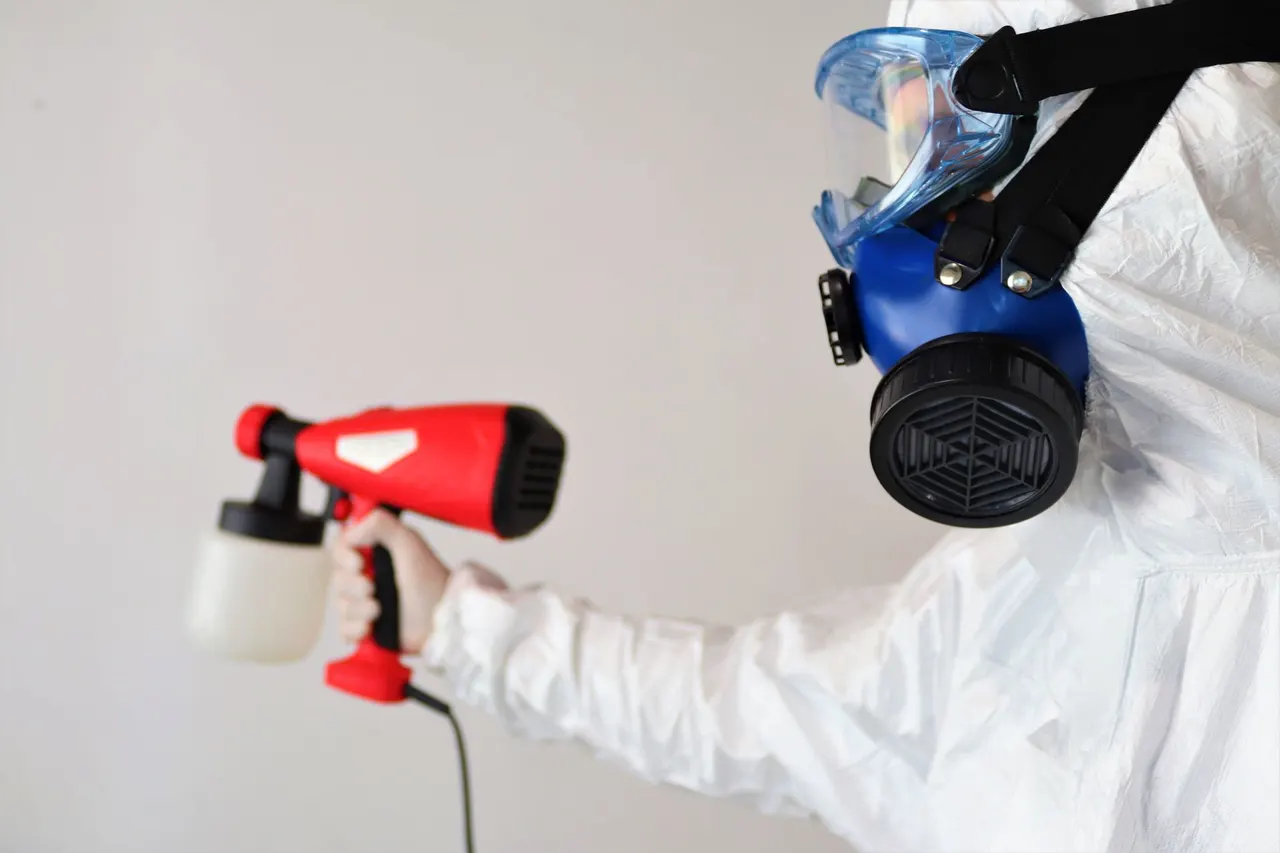
    Where applicable, work that disturbs painted surfaces in qualifying older buildings must follow EPA Lead-Safe requirements. We consider the building and work scope before cutting or removing materials, then plan containment and handling to protect occupants and adjoining spaces.

Local Landmarks for Easier Access

Our dispatch notes use familiar Kuna Town Center references to help locate the right block and entrance, not to imply a landmark caused a water loss. Tell us whether your property is near the Kuna Town Center plaza or Kuna Performing Arts Center and provide the street address or suite. For commercial calls, identify the public entrance and any loading access. We use that information to plan where extraction equipment can be unloaded without blocking customer routes or occupied entries.

  • Kuna Town Center plaza

    The plaza is a local orientation point for properties in the Town Center area. Providing the nearest entrance or storefront description alongside your street address helps distinguish a specific unit from nearby businesses.

  • Kuna Performing Arts Center

    The center provides a recognizable reference when describing a nearby location. Use the property address and entrance details as the primary directions; the landmark helps clarify which part of Kuna Town Center you mean.

  • Local retail center

    The local retail center is a practical reference for nearby commercial addresses. Identifying the storefront, suite, and customer entrance helps us plan equipment access without treating the center itself as a cause of water damage.

  • Market Street district

    The Market Street district is a commercial reference within the Kuna Town Center service area. Retail and mixed-use properties can have different access arrangements, so suite numbers and entrance details help locate the affected space.

  • Kuna Commons area

    Kuna Commons area is a local neighborhood and commercial orientation signal. We use the customer's address and nearby property reference to plan arrival and equipment handling, rather than assuming a uniform building layout.

  • Idaho State Highway 69

    Highway 69 is a regional road connection serving Kuna. We use the caller's street address and entrance details to route to the property; actual arrival time depends on current road and access conditions.

  • Meridian Road Corridor

    The Meridian Road Corridor provides a useful regional approach reference for properties connected to the service area. Share the closest cross street and unit entrance so the crew can reach the correct access point.

Neighborhoods We Serve Locally

We serve the Town Center core and nearby named areas, with dispatch planned around the exact address, property type, and access point. A suite number, nearest entrance, and whether water is still flowing help us arrive prepared. From the Market Street district to the Kuna Commons area, we keep extraction and drying equipment staged for the rooms that need it, not simply the easiest room to reach.

  • Town Center core
  • Kuna Commons area
  • Market Street district
  • Kuna Town Center plaza area

Water Damage Work and Outcomes

  • Market Street district

    Before

    A supply line leak wet a small retail suite near the Market Street district, with water reaching carpet and the base of a partition wall.

    After

    We isolated the affected area, extracted standing water, and checked the carpet edge and wall base for spread. We moved contents clear of the wet zone, set air movers and dehumidification, and recorded moisture readings at marked points. Follow-up checks guided equipment adjustments before the damaged materials moved to repair. Extraction and initial mapping were completed in about 3 hours. The drying plan used daily readings for 4 days, with the suite's unaffected customer area kept separate from the work zone.

  • Town Center core

    Before

    A winter pipe leak in a Town Center core residence released water into a kitchen and adjoining living-room floor.

    After

    We helped stop the source, removed pooled water, and checked the cabinet base, flooring transitions, and nearby wall. Moisture mapping identified damp areas beyond the visible spill. We placed drying equipment to move air across the affected assembly and returned to compare readings before recommending the next repair step. The initial inspection and extraction took about 4 hours. Moisture was checked at 12 marked locations over 3 days, helping determine which materials required further attention.

  • Kuna Town Center plaza area

    Before

    A storm left water at the entry of a mixed-use property near the Kuna Town Center plaza, with damp flooring and stained baseboards.

    After

    We inspected the threshold and adjacent wall edges, extracted water, and checked whether moisture extended into the neighboring room. The crew protected the dry route through the property, documented the wet boundary, and set equipment after confirming that the water source had stopped. Readings informed each adjustment. Water removal and setup took approximately 2.5 hours. Follow-up measurements across 10 points over 3 days tracked drying progress and informed the repair sequence.

Seasonal Water Risks in Kuna Town Center

  • Spring

    As the ground thaws and spring rain arrives, water finds the low spots around a foundation and the gaps in flashing that winter hid. Inspect the roof line and gutters, watch the base of exterior walls after rain, and run the irrigation system zone by zone to catch a cracked line early. A stain that appears in spring usually started months earlier, so trace it before patching it.
  • Summer

    Hot, dry summers make it easy to miss a slow leak, because the surface dries within hours while the subfloor stays wet. Check sprinkler zones for overspray and broken heads, look behind the washing machine and under sinks, and watch for a musty smell in rooms beside the irrigation lines. If a damp patch keeps returning in the heat, the water is still coming from somewhere, and a meter will find it.
  • Fall

    Fall is the time to get ahead of winter: clear gutters before the leaves settle, check the roof flashing before the first freeze, and find the main water shut-off before a pipe ever bursts. Drain and shut down the irrigation system when the season ends, because a line left full of water is the first to split in a cold snap. A dry autumn is the cheapest time to fix the small things that become emergencies in January.

  • Winter

    A hard freeze can split a pipe in an unheated space and the leak may not show until the thaw, when water runs inside a wall or ceiling. Keep the house heated even when you are away, protect exposed pipes, and know where the main shut-off is before you need it. If you find water, stop the supply, keep clear of any ceiling that is sagging, and get extraction started before the water reaches the next room.
Questions to Ask Before You Hire

Before hiring emergency restoration help in Kuna Town Center, ask how the crew will identify the water source, measure hidden moisture, and decide when drying is complete. A clear answer should include what gets inspected, how readings are recorded, and who handles the next repair step. In a retail or mixed-use building, ask how they will protect occupied areas and manage access. You should also understand whether the contractor follows recognized restoration practices and how they will document the work for your records or insurer.

  • How will you find water behind the wall or under the floor?

    A visual check alone can miss moisture in cavities and beneath finished flooring. A good answer describes moisture readings, inspection points, and how the crew will mark the affected boundary. That process helps avoid both unnecessary removal and leaving wet material behind.

  • How often will you check the drying equipment and readings?

    Drying conditions change as materials release moisture. Ask whether follow-up checks are planned, what readings are compared, and how equipment settings are adjusted. A documented schedule, often using daily checks, shows the work is guided by measurements rather than guesswork.

  • How will you keep our suite or home accessible during work?

    Equipment, hoses, and removed materials can interfere with customers, tenants, or household routines. The contractor should explain where the work zone will be, how clean areas are protected, and which entrance remains usable. That matters in Kuna Town Center mixed-use properties.

  • What water category and materials are you dealing with?

    Clean supply water, storm water, and sewage require different handling. The answer should identify the likely source, affected porous materials, and any containment or removal required. A clear explanation helps you understand why cleanup steps differ from one room or loss to another.

  • What will you document for the repair and insurance process?

    Photos, moisture readings, equipment records, and an itemized description help establish what was affected and what work occurred. Ask how those records are organized and shared. Your insurer determines coverage, but complete restoration documentation can support the claim discussion.

FAQs: emergency water damage repair in Kuna Town Center

Still wondering? (833) 546-4116

Local service team

Call for emergency water damage repair in Kuna Town Center

If water is spreading through your Kuna Town Center home, suite, or retail space, call us now at (833) 546-4116. Tell us what failed, where water is visible, and whether the supply is still running. We will focus first on the source, safe access, and water removal, then explain the inspection and drying steps. Our team serves Ada County, including the Town Center core and nearby properties.

Contact the Kuna Team

Call (833) 546-4116 when water reaches your home or business in Kuna, Idaho. Tell us whether the source is still active, which rooms are affected, and when the damage began; that helps direct the next steps. Calls are accepted at any hour for emergency inquiries, and service coverage includes Kuna, ID, with ZIP codes 83634 and 83642.

Thanks. Your request is in and the team will follow up shortly.