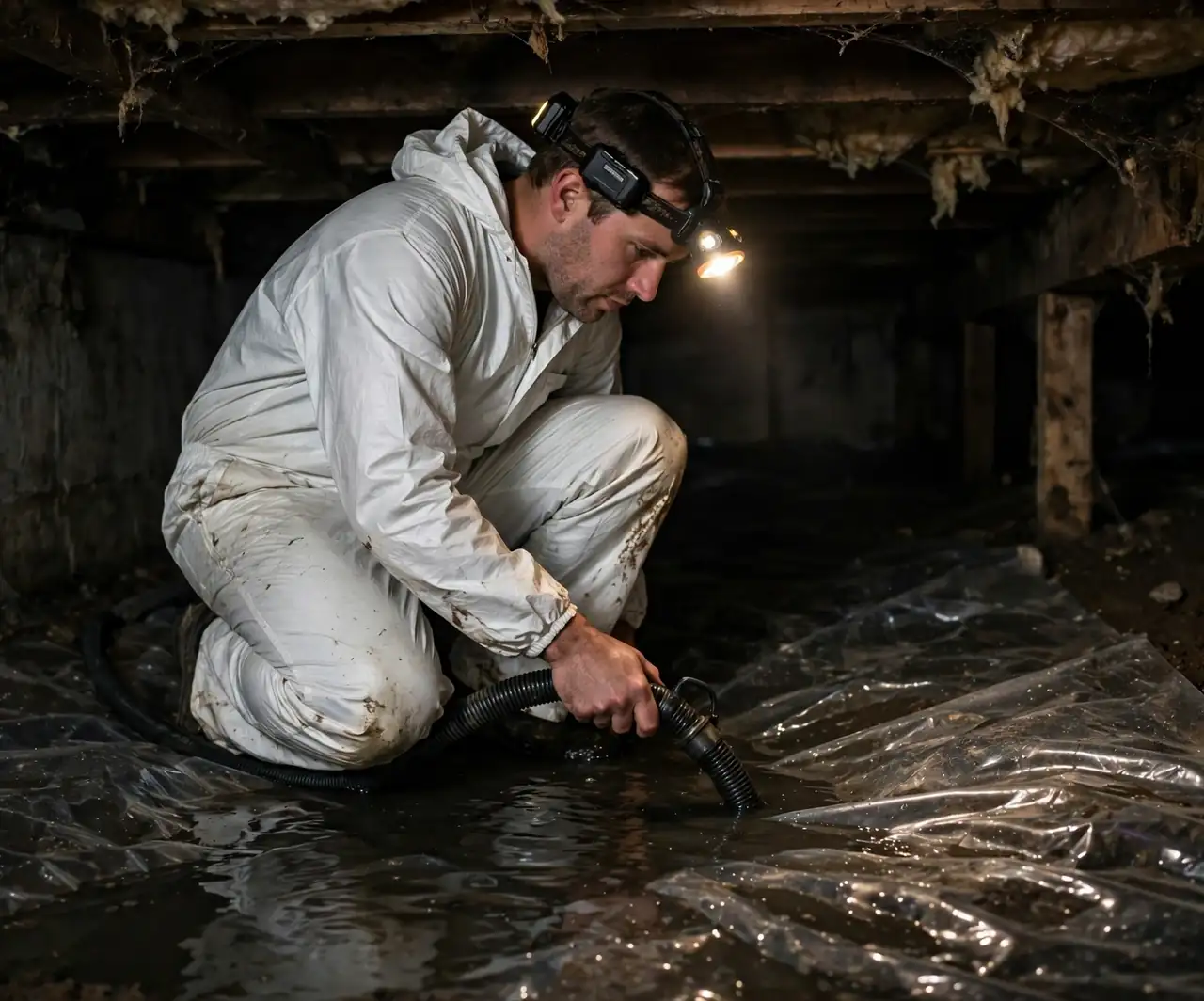
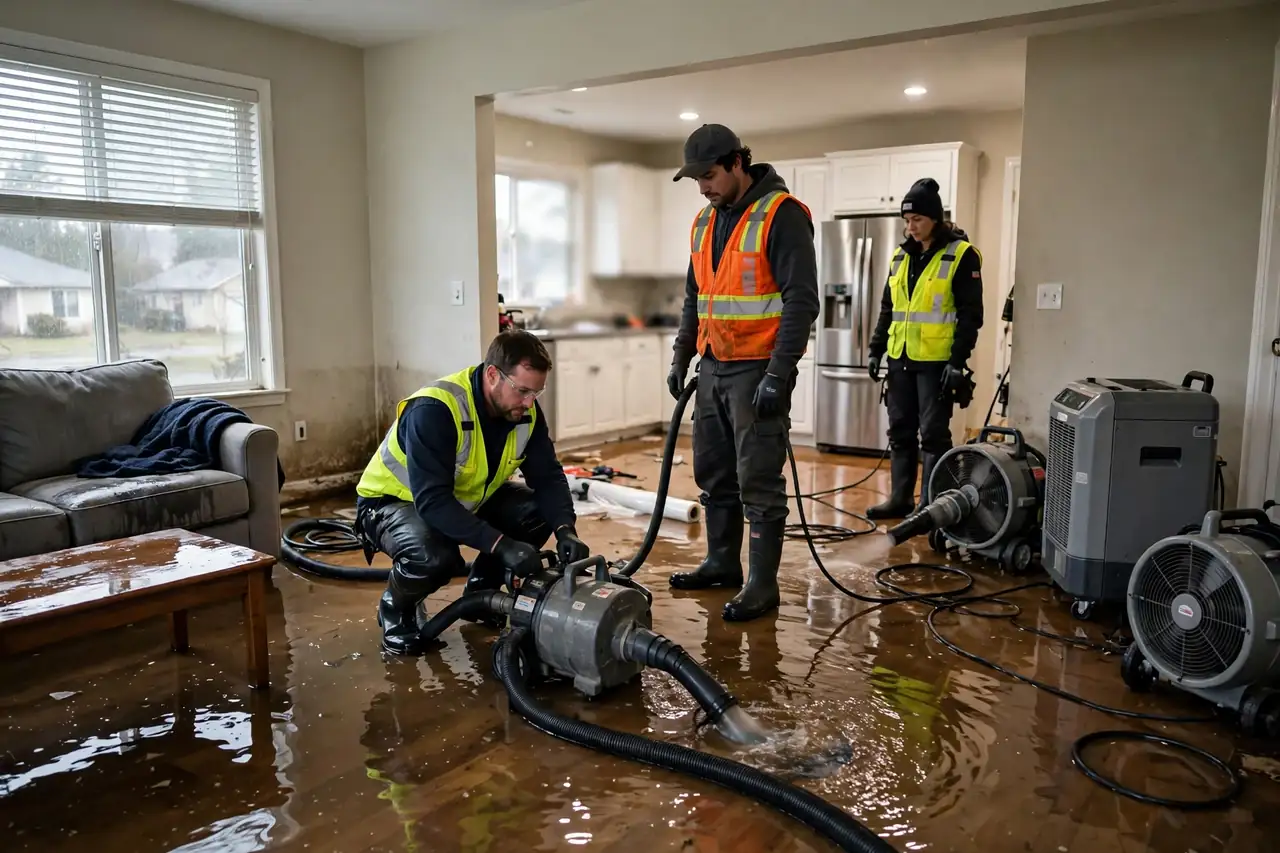
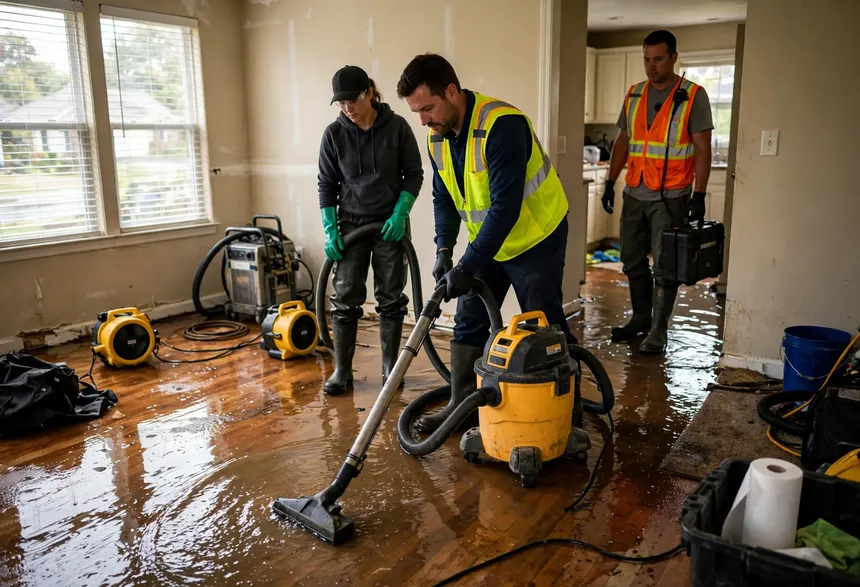
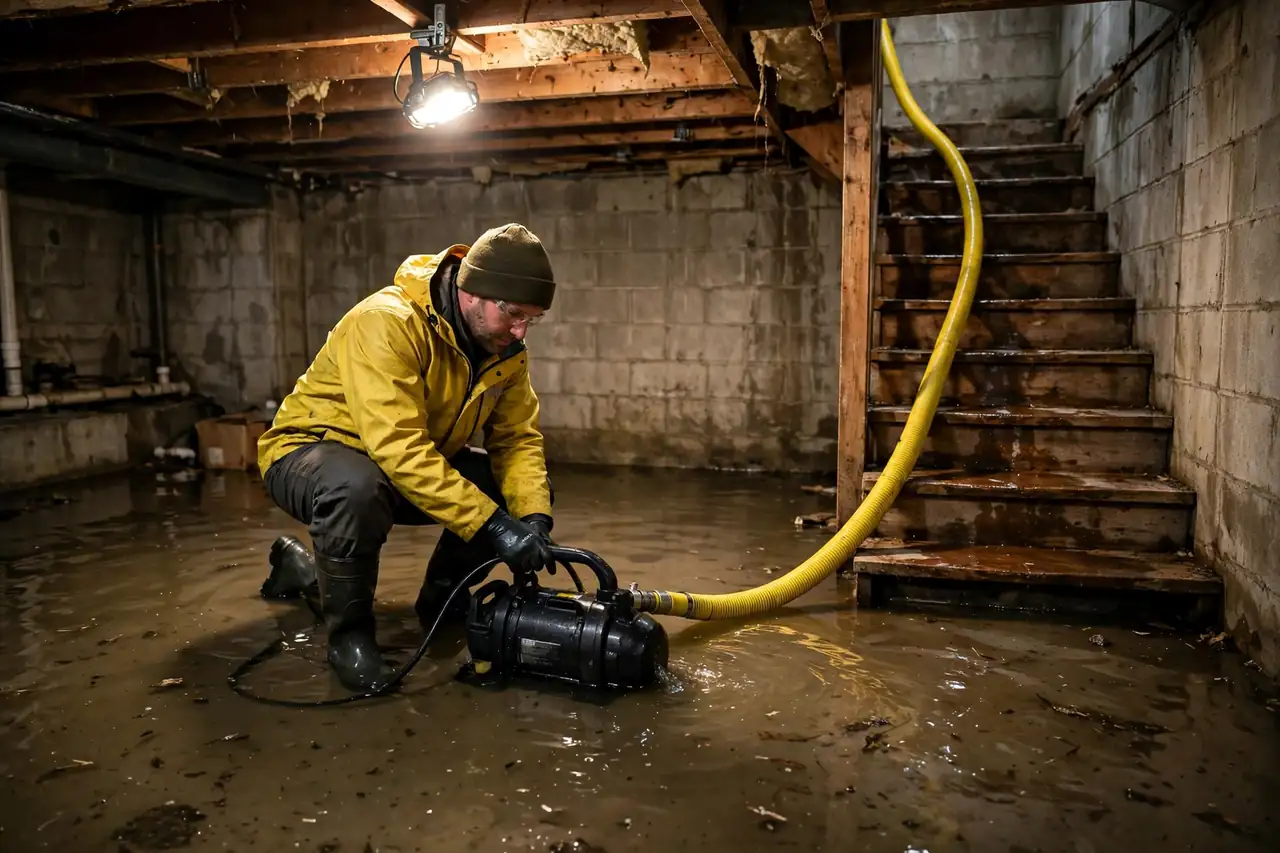
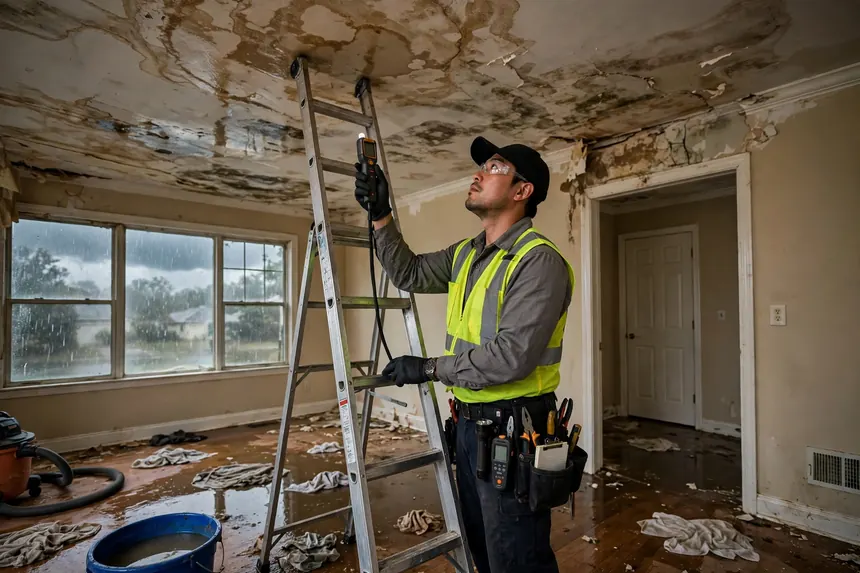
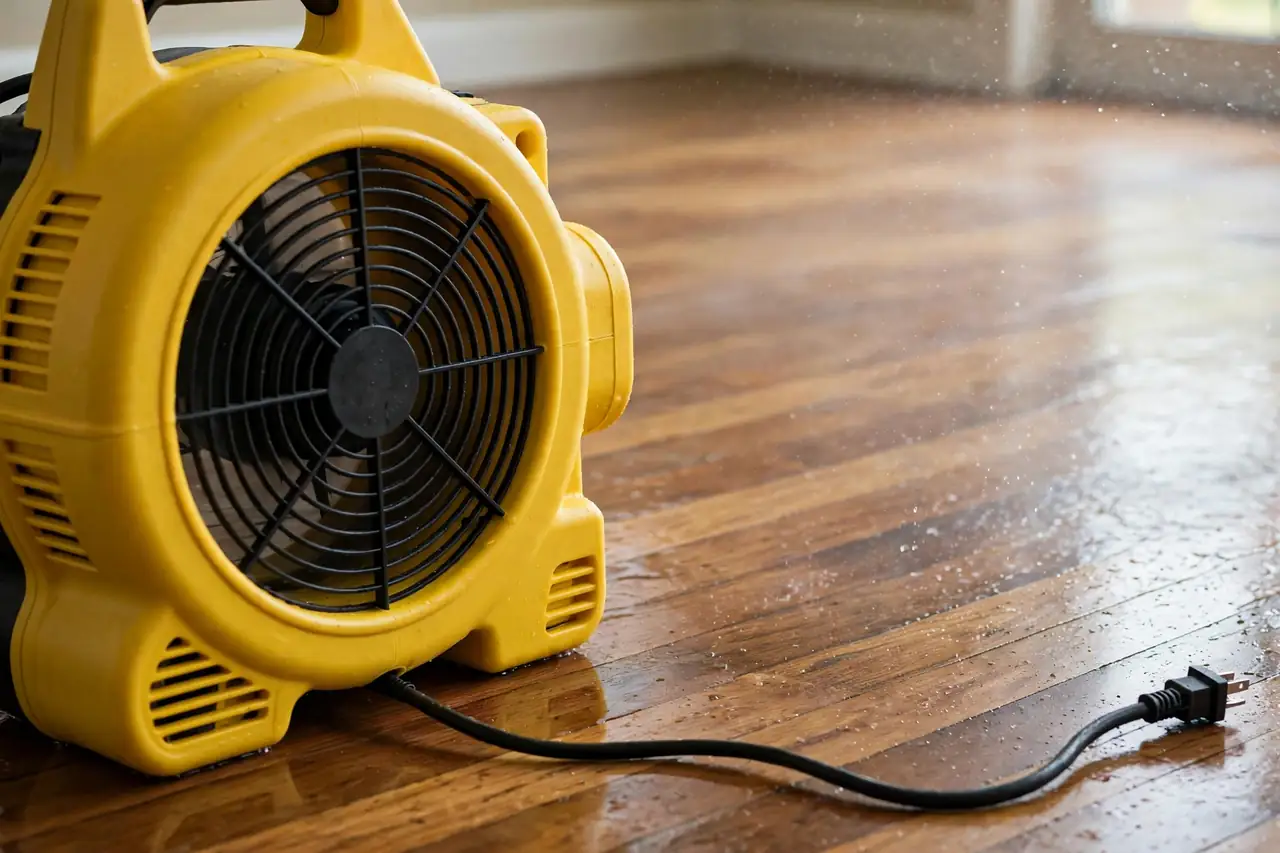
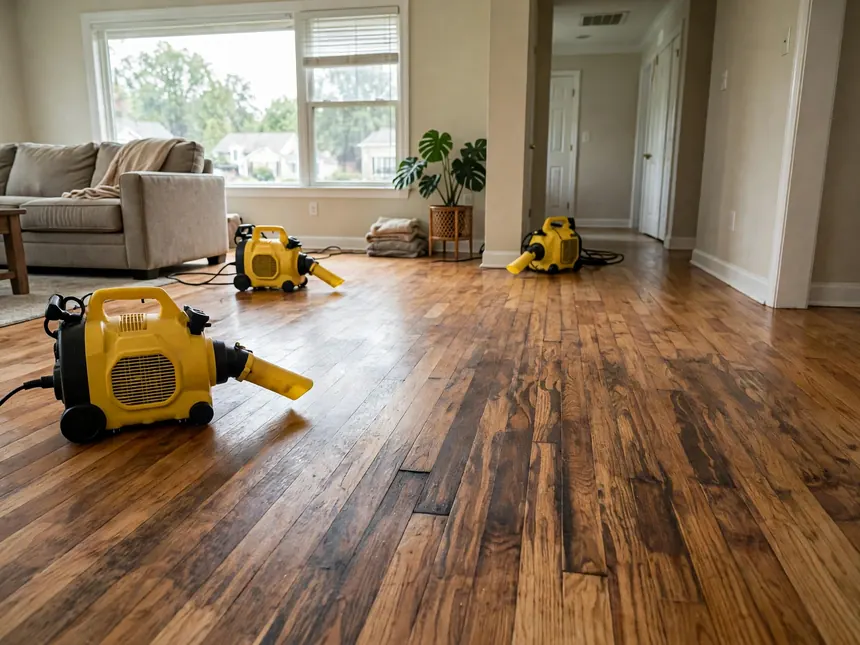
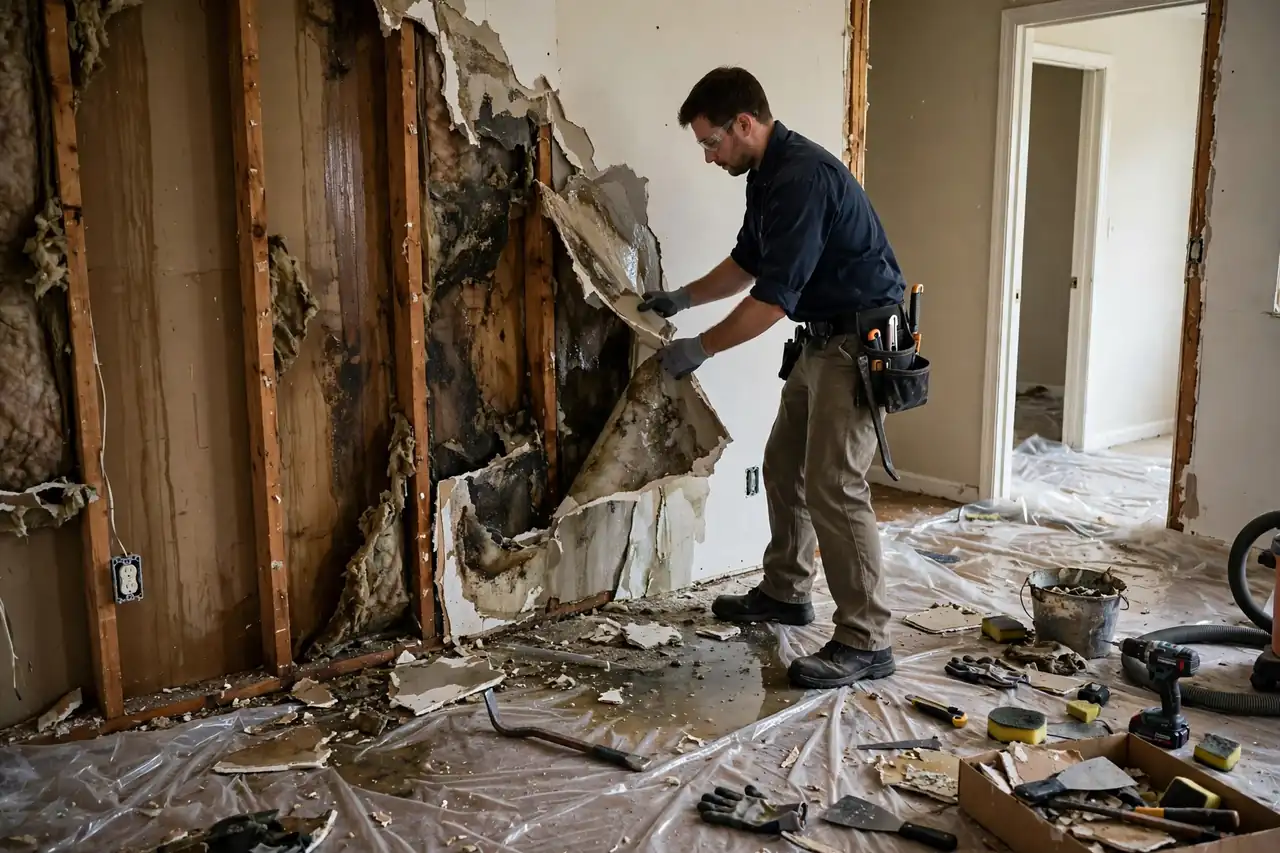
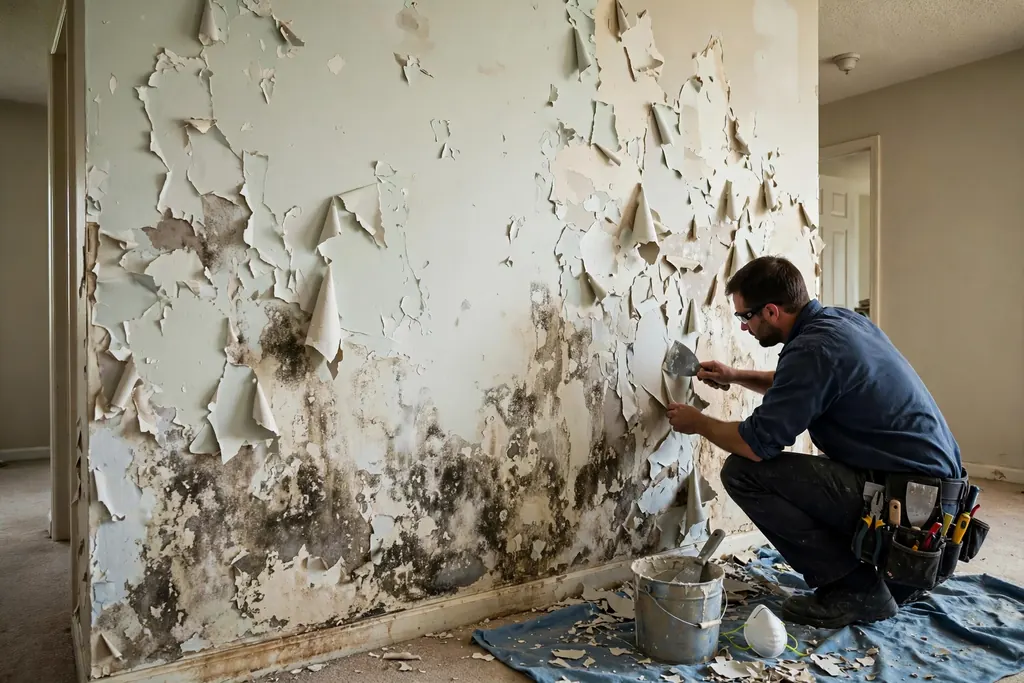
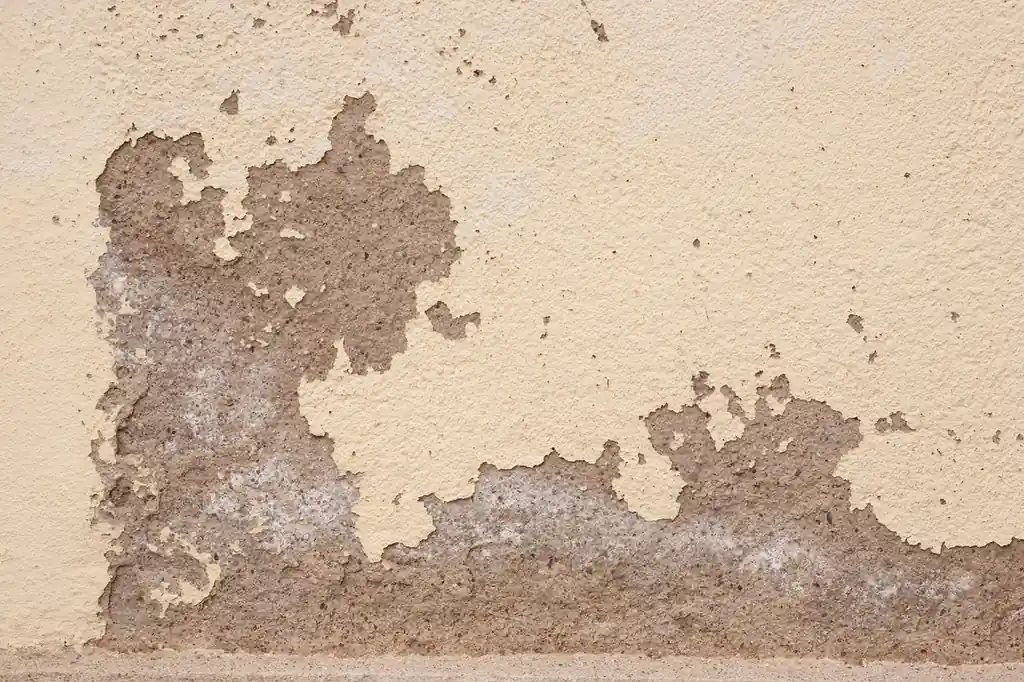
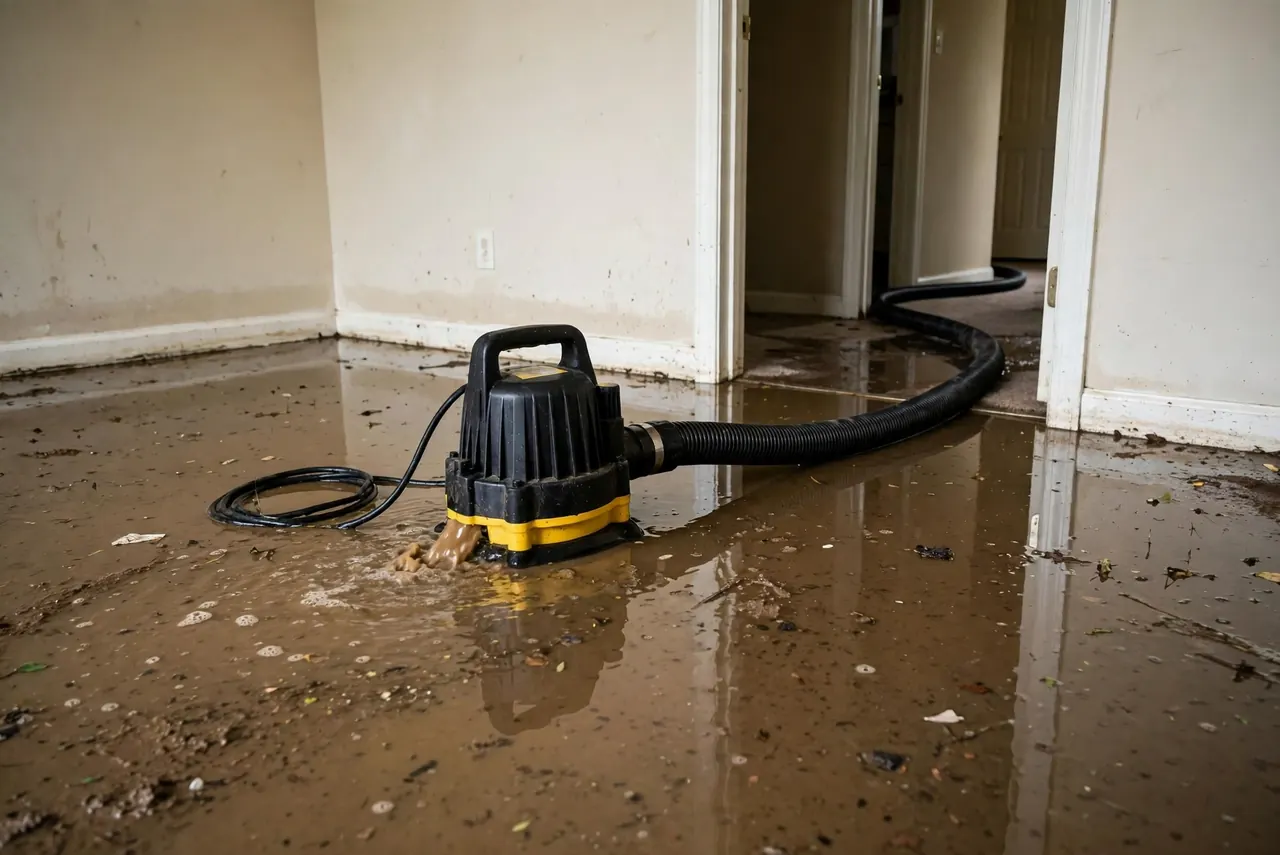
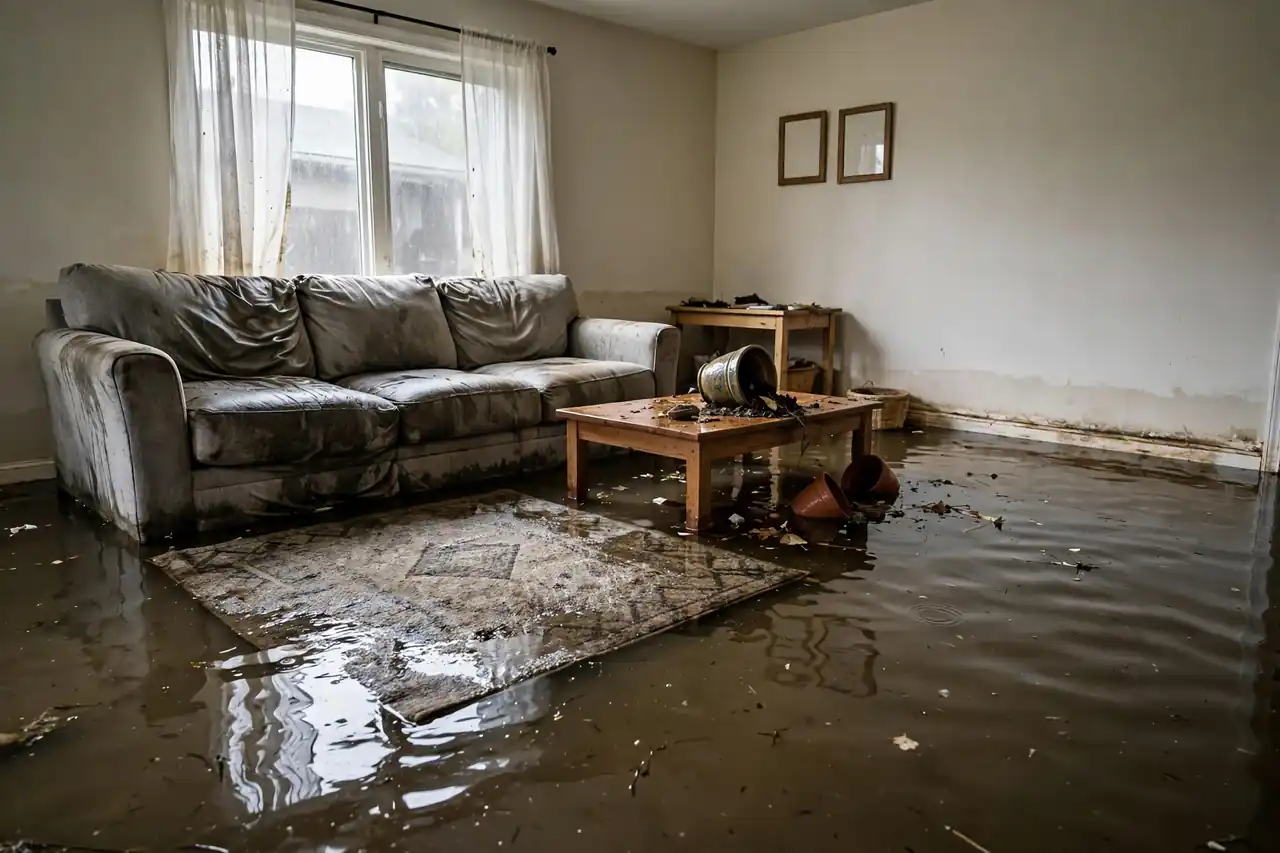
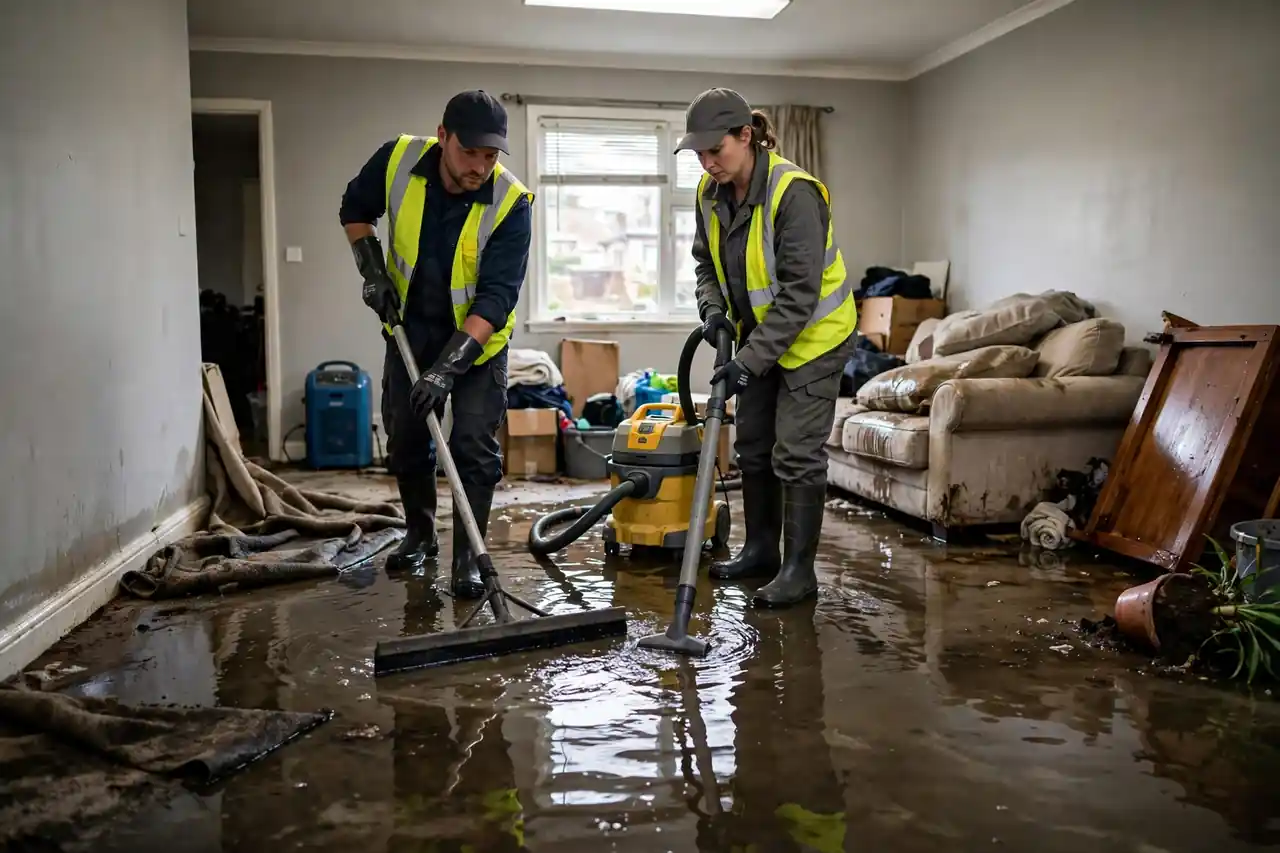
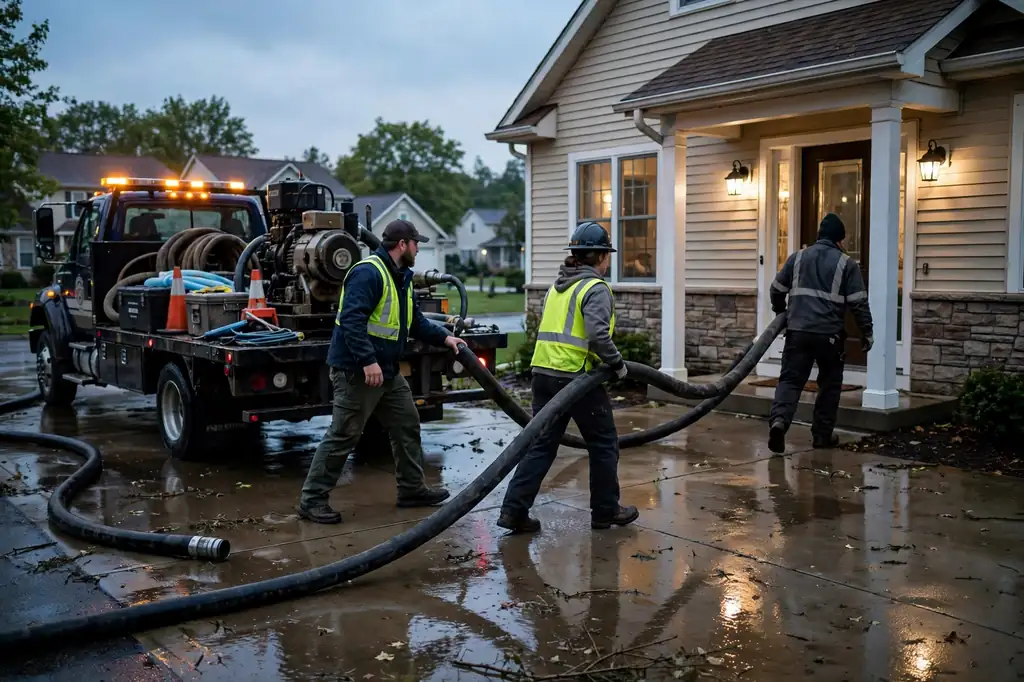
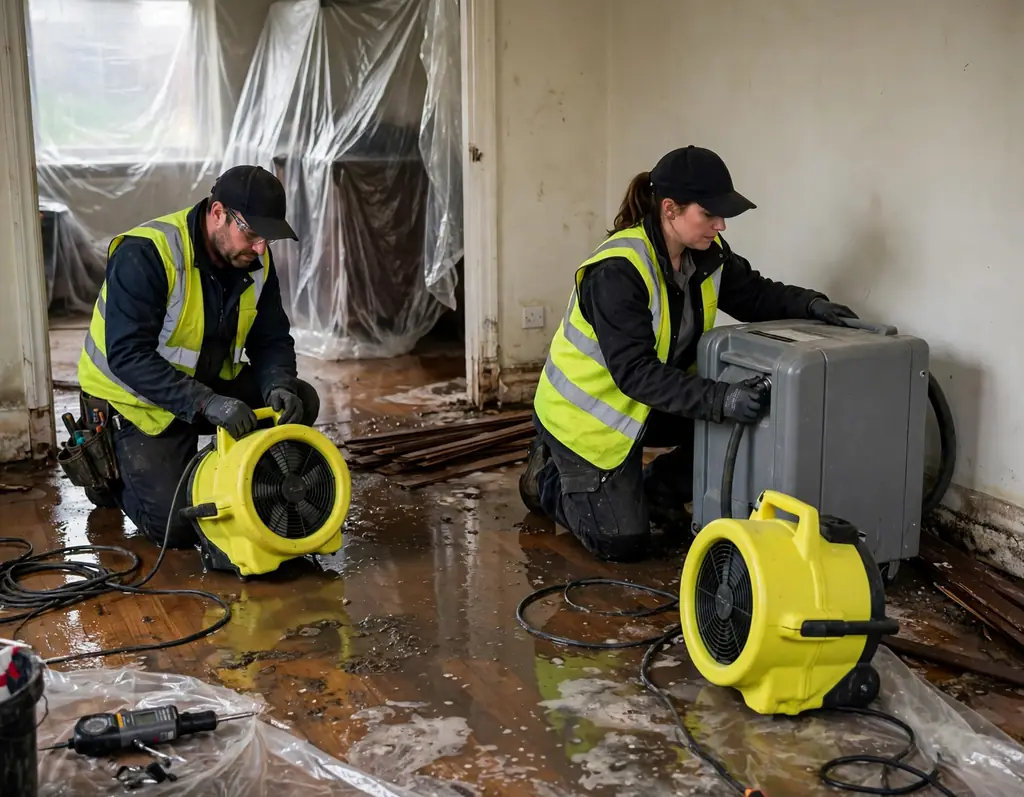
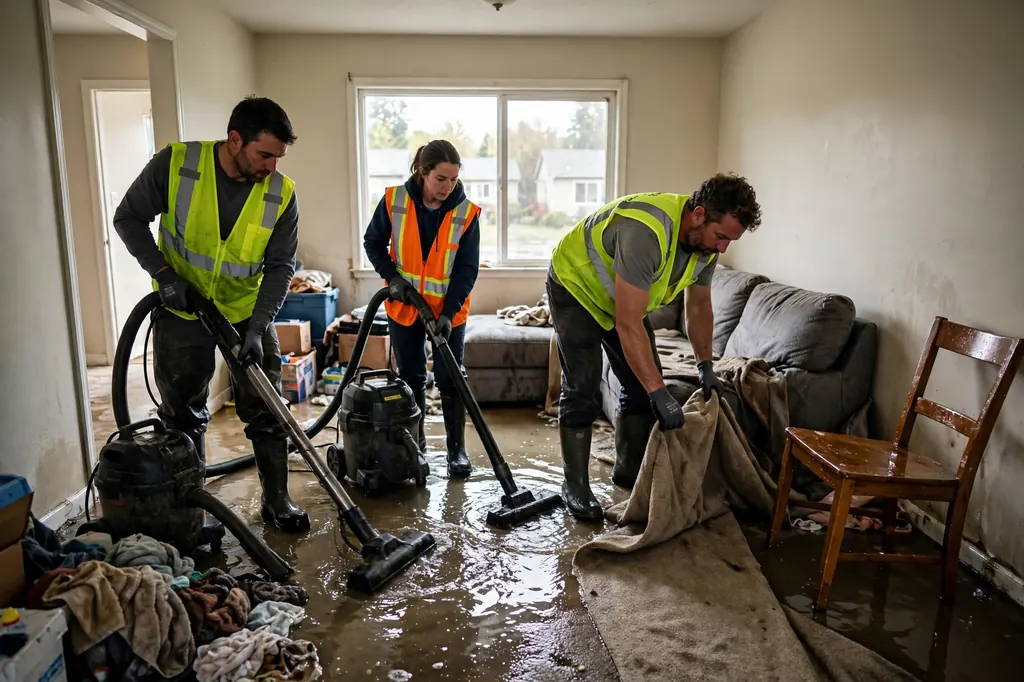
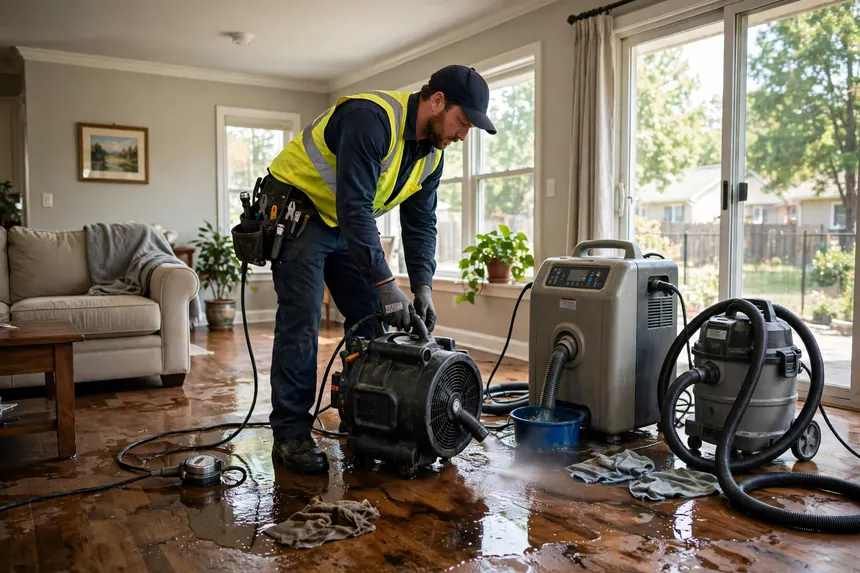
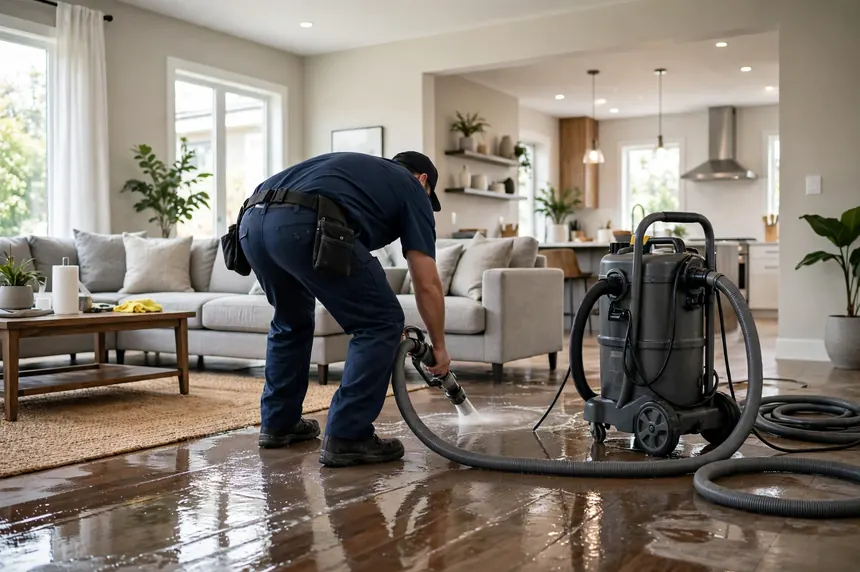
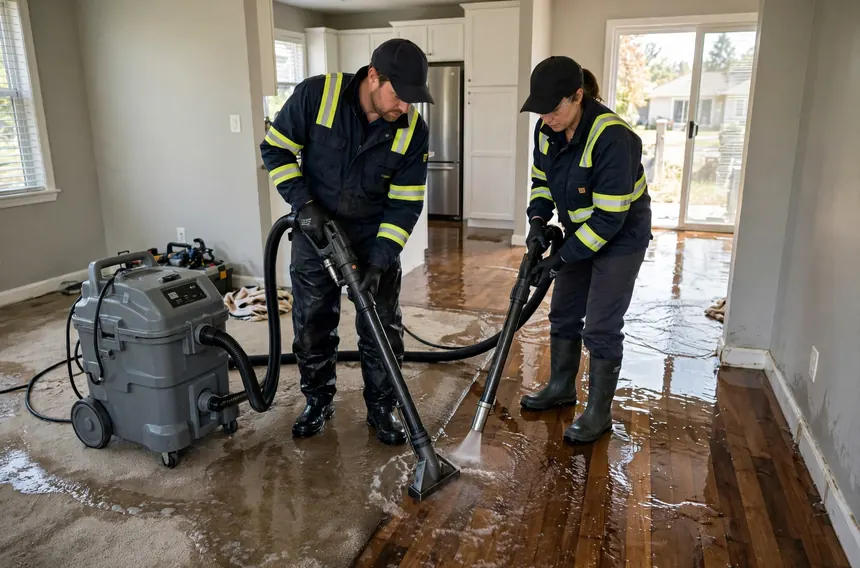
Creekside homes sit close to the low ground where water collects after wet weather, and the pattern here is seepage rather than a sudden burst: a damp line at the base of a wall, a wet floor edge, or a crawl space that stays damp long after the rain stops. It returns after every wet spell until the water path is named.
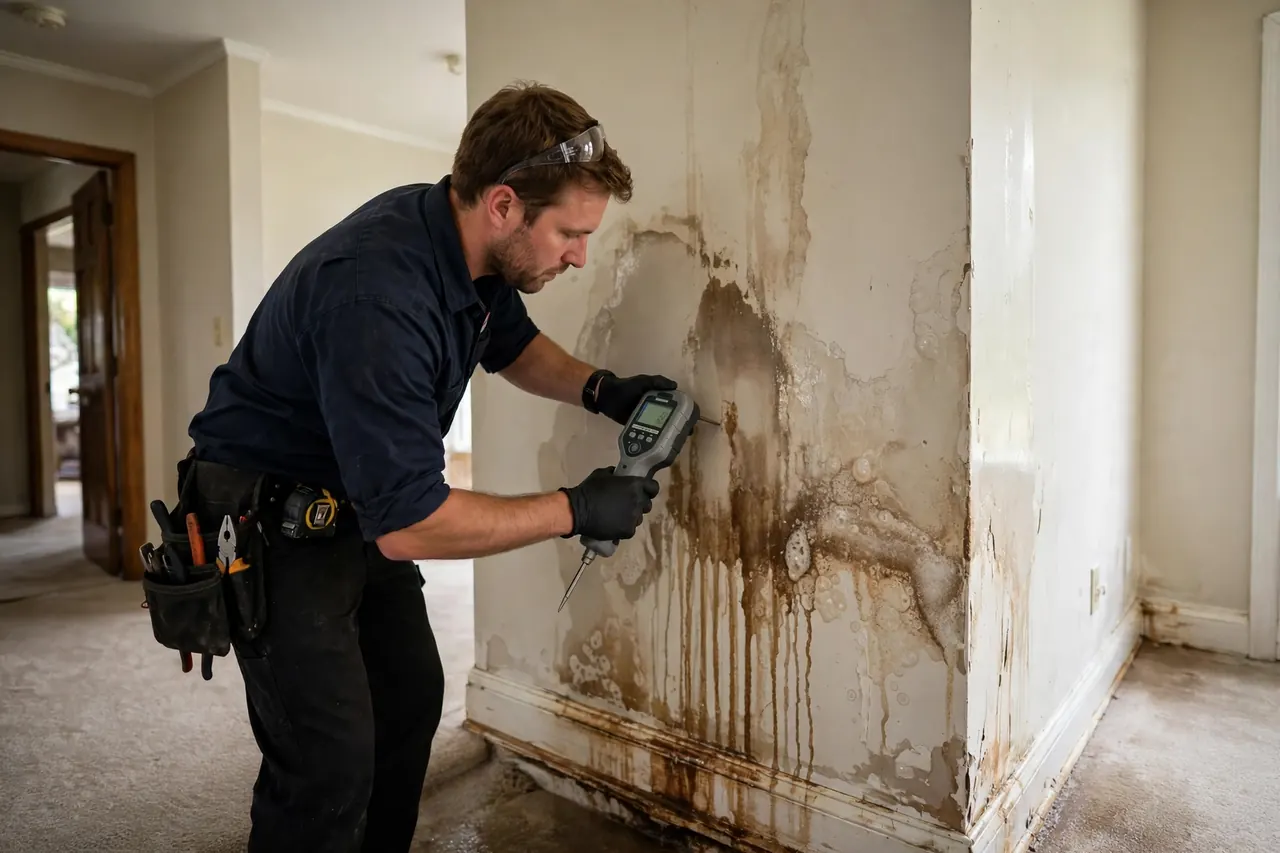
We check the outside grade, the gutters, and the wall base together, because seepage is a water-path problem as much as a drying problem. Readings along the base of the affected walls show how far the moisture has travelled, and the note we leave describes the path, so the drying work and any drainage fix address the same cause.
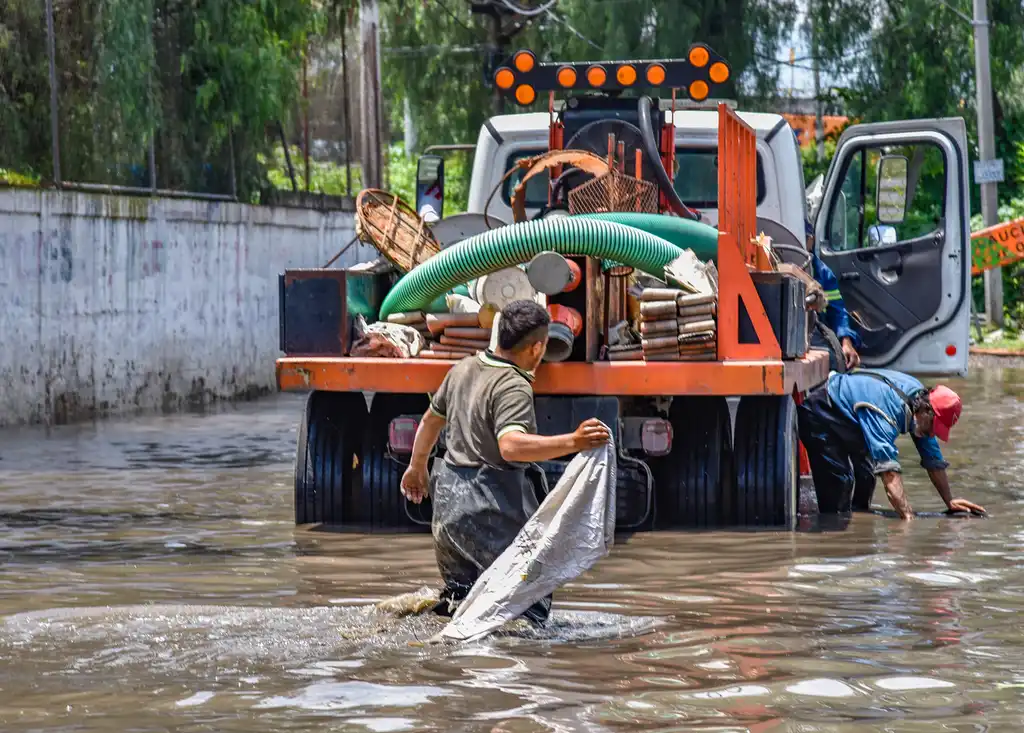
Before irrigation arrived, this part of the valley was dry sagebrush steppe drained by Indian Creek and Ten Mile Creek; today canals, laterals, and ditches interlace the farmland around Kuna. That history matters: the ground here was shaped by water moving across flat land, and the low spots still collect it first.